Knee pain going down stairs is one of the most telling symptoms in all of knee pain diagnosis, and one of the most common complaints Dr. Sarah Scharf hears from new patients at Marin Joint Health in Novato. If descending stairs makes your knee ache, grind, or feel unstable, that is not just a nuisance. It is a signal that something specific is happening in the mechanics of your knee that is worth understanding and addressing.
Why Stairs, Especially Going Down, Are So Hard on the Knee
Walking on flat ground loads the knee joint with roughly 1.5 times your body weight with each step. Going up stairs increases that to about 3 times your body weight. But going down stairs is actually harder on the knee than going up; it can load the joint with 4 to 5 times your body weight as the muscles work to control your descent.
That controlled lowering motion, called an eccentric contraction, places enormous demand on the quads, the kneecap, and the cartilage surfaces underneath it. If any part of that system is not working properly, descending stairs is where you feel it first and feel it worst.
The Most Common Reasons Your Knee Hurts Going Down Stairs
Patellofemoral Pain Syndrome (Runner's Knee)
This is the most frequent culprit. The kneecap sits in a groove at the front of the femur and is supposed to glide smoothly through it during movement. When it tracks even slightly off course, due to muscle imbalances, hip weakness, or foot mechanics, the cartilage under the kneecap gets compressed unevenly. Descending stairs puts direct compressive load on exactly that surface, which is why patients with patellofemoral problems almost always report stairs as their worst activity.
Knee Osteoarthritis
As cartilage thins and joint surfaces become irregular, the knee loses its ability to absorb and distribute load smoothly. The increased force of stair descent hits a joint that simply cannot handle it the way it once could. Patients with osteoarthritis often notice stair pain well before flat-ground walking becomes significantly painful; stairs are often the early warning sign.
Meniscus Damage
The menisci, the C-shaped cartilage pads inside the knee, are shock absorbers. A torn or degenerated meniscus loses its ability to cushion the joint under load. The combination of high compressive force and the rotational component of stair descent can make a compromised meniscus very symptomatic, even when the same knee feels relatively okay on flat ground.
Quad Weakness and Inhibition
Controlling your descent on stairs requires strong, coordinated quad function. When the quads are weak, or when the nervous system is inhibiting their output due to chronic pain or prior injury, the knee buckles slightly under that eccentric load. The joint then absorbs force it was never designed to handle without proper muscular support. This creates pain, instability, and a pattern that tends to get worse over time if the underlying weakness is not addressed.
IT Band Tightness
The iliotibial band runs down the outside of the thigh and attaches just below the knee. When it is tight or inflamed, it creates lateral tension on the kneecap and compresses the outer knee structures during the bending and straightening motion of stair descent. IT band problems are particularly common in hikers and trail runners, a significant portion of the active population in Marin County.
Poor Hip and Foot Mechanics
This is the layer most treatments miss. Weak hip abductors allow the femur to drop and rotate inward during each step, which shifts the kneecap laterally out of its groove. Overpronating feet rotate the lower leg inward, creating similar forces from below. Neither of these shows up on a knee MRI, but both directly cause the kneecap tracking problems that make stairs painful.
Why This Symptom Matters Beyond the Inconvenience
Stairs are unavoidable for most people. But the reason stair pain matters clinically is not just the inconvenience; it is what it tells us about what is happening in the knee.
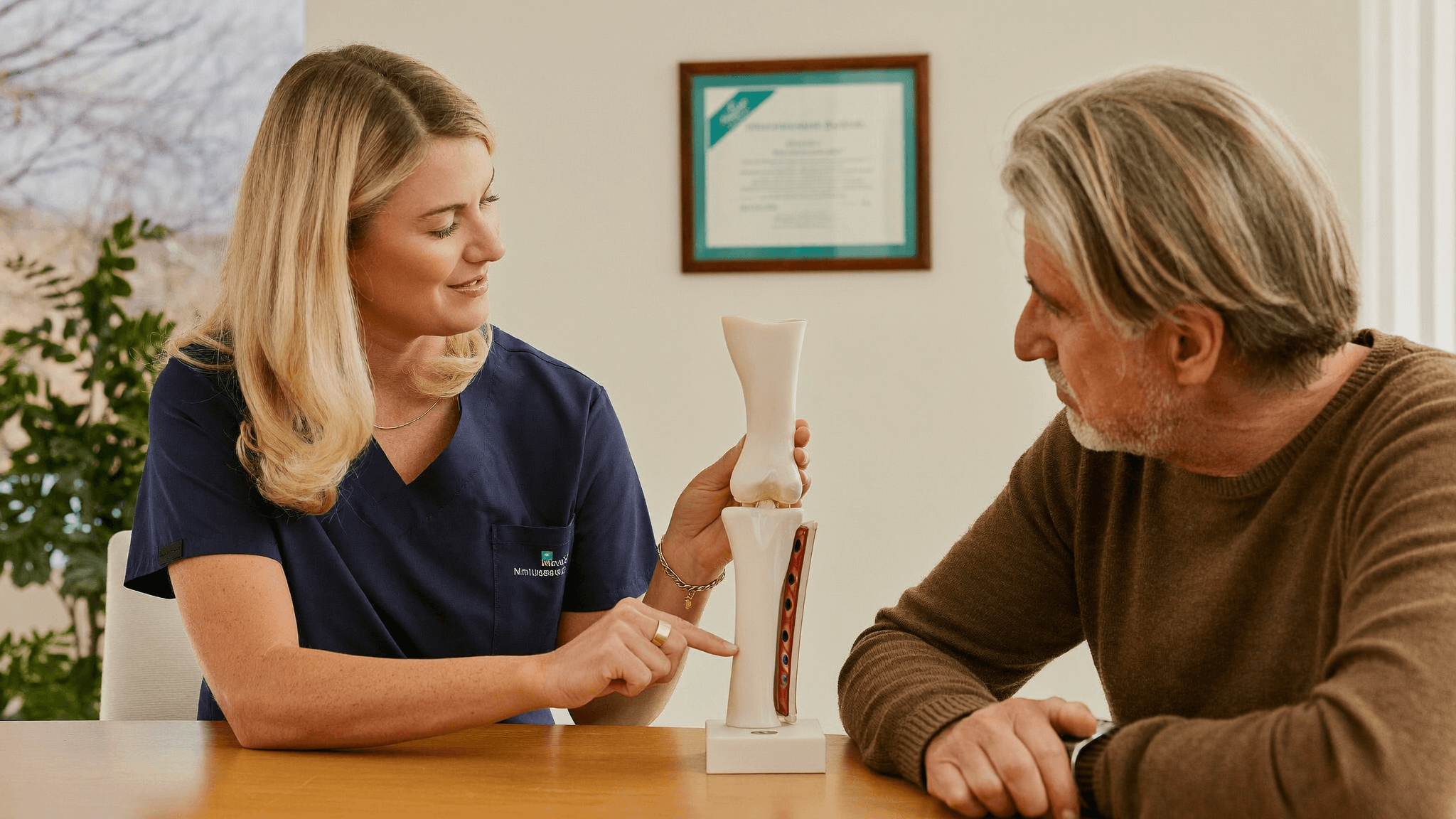
Pain that is specifically worse going down stairs points strongly toward the patellofemoral joint and the biomechanical system supporting it. That is useful diagnostic information. It tells Dr. Scharf where to focus and which components of treatment are most important for your specific presentation.
It also tends to be a leading indicator. Patients who ignore stair pain for months or years typically find that it gradually spreads to other activities, walking on inclines, getting up from chairs, eventually flat-ground walking. Addressing it early, when it is still primarily a mechanical problem rather than a structural one, produces faster and more complete results.
How Non-Surgical Treatment Addresses Stair Pain
At Marin Joint Health, stair pain from knee trouble is treated as what it is, a multi-layer problem requiring a multi-layer solution. Dr. Scharf's approach addresses the biomechanics, the tissue damage, the neuromuscular dysfunction, and the contributing factors above and below the knee as part of a structured program.
Correcting the Kinetic Chain
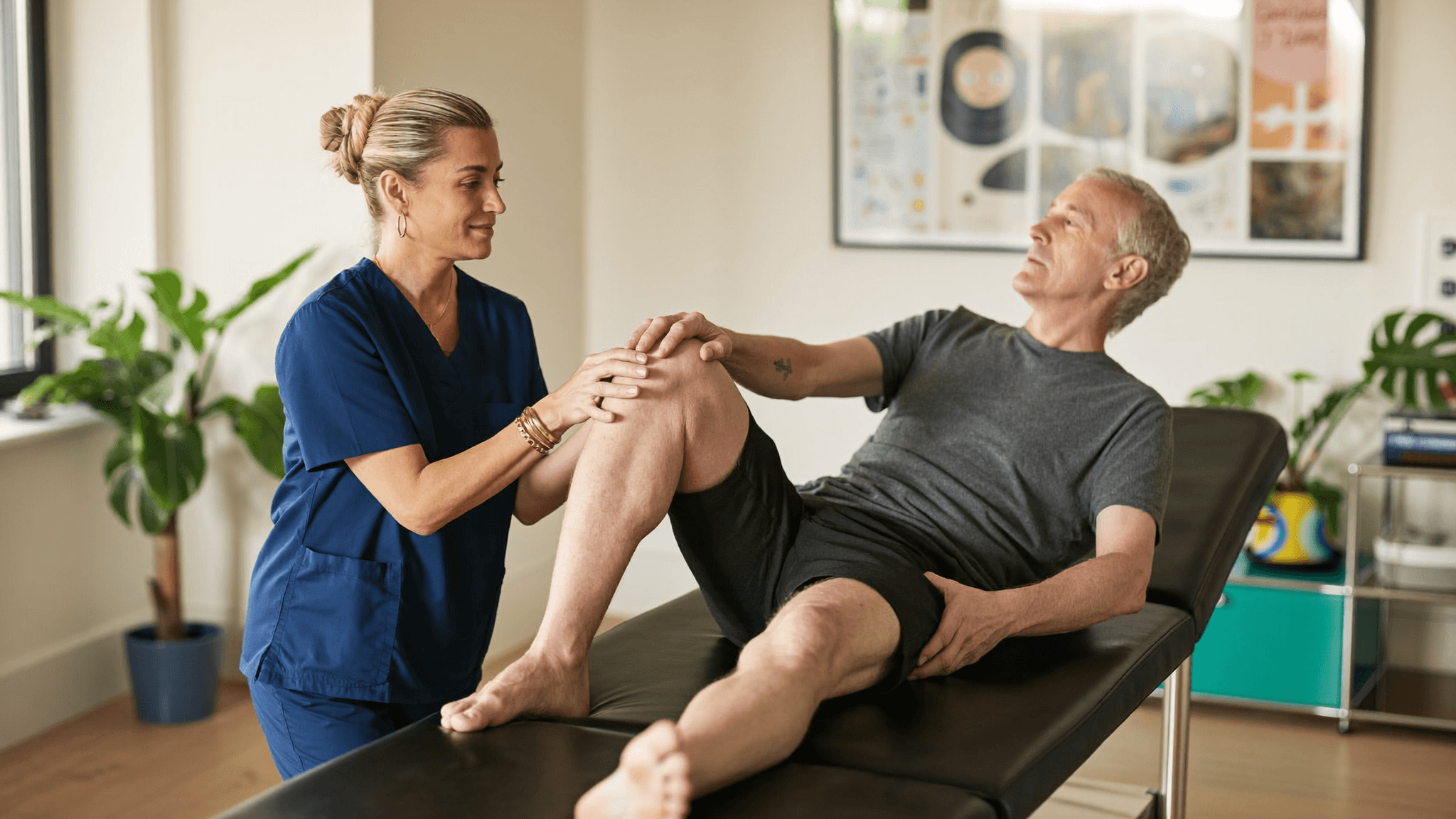
Chiropractic adjustments to the spine, pelvis, hips, and ankles correct the alignment issues that are altering how load travels through the knee during stair descent. When the hip is properly positioned and the ankle is properly supported, the kneecap has a much better mechanical environment to track correctly in.
Resetting Neuromuscular Function
Trigenics Neuro-Kinetic Therapy directly addresses the quad inhibition and VMO weakness that make eccentric stair loading so difficult. By resetting the nerve-to-muscle signaling patterns that have been disrupted by chronic pain, Trigenics restores proper muscular support quickly, often producing measurable strength improvements within a single session. For patients whose stair pain is driven largely by weakness and instability, this is frequently the most important treatment in the protocol.
Reducing Joint Inflammation and Supporting Tissue Repair
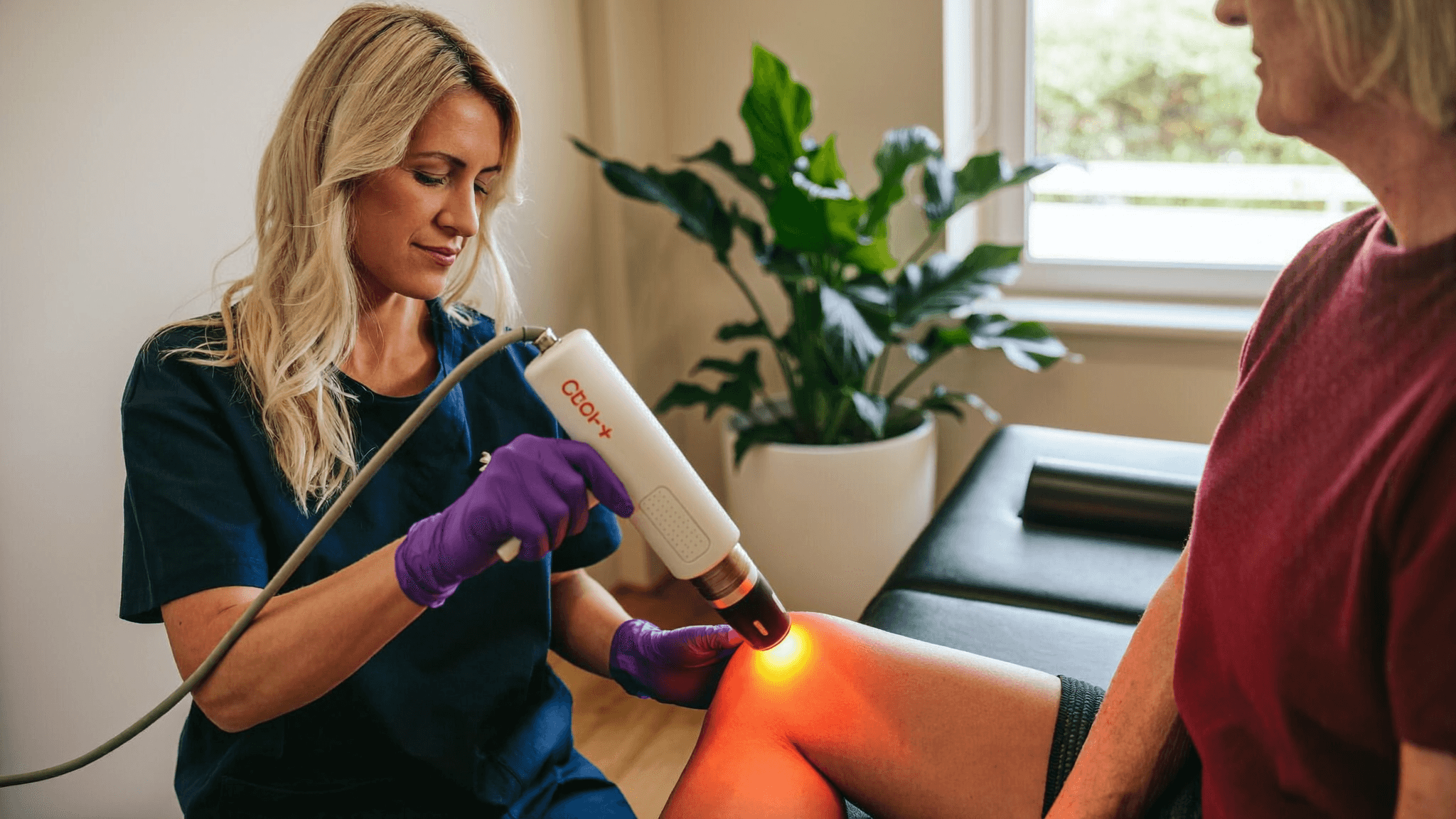
Class 4 laser therapy reaches the cartilage surfaces and joint capsule where the irritation lives and accelerates cellular repair through photobiomodulation. For patients with underlying arthritis or cartilage wear, this addresses the tissue-level component of the pain rather than simply managing symptoms.
Decompressing the Joint
Knee-On-Trac decompression therapy unloads the joint, draws nutrient-rich fluid back into the cartilage, and reduces the compression that makes stair loading so painful. Many patients notice meaningful improvement in stair pain relatively early in the program as the joint decompression takes effect.
Addressing Foot Mechanics
Custom Foot Levelers orthotics correct the overpronation and uneven foot loading that contribute to poor kneecap tracking. Combined with the alignment work and neuromuscular reset, properly fitted orthotics make a consistent difference in how the knee handles the demands of stair descent.
The 12-Week Protocol for Lasting Stair Pain Relief
All of these therapies are delivered together as part of Dr. Scharf's 12-week knee pain relief protocol, a structured program that combines nine evidence-based treatments with daily home care, nutrition guidance, and a progressive strengthening program. The protocol is the reason patients who have tried individual therapies elsewhere without lasting results finally make real progress here.
Stair pain that has been present for months or years did not develop from one single cause. Treating it effectively means addressing all the contributing layers simultaneously. That is what the 12-week program is designed to do.
If you are dealing with knee pain on stairs in Novato or anywhere in Marin County, the first step is a thorough evaluation to understand exactly what is driving it. Schedule a consultation with Dr. Sarah Scharf at Marin Joint Health or call (415) 818-0243. Flexible payment plans are available for the 12-week program.