Treatment
Herniated and Bulging Disc Pain
A herniated or bulging disc can send pain, numbness, or weakness down your arm or leg. We relieve the pressure without surgery.
A herniated or bulging disc happens when a spinal disc pushes out of place and presses on nearby nerves. That can cause back or neck pain along with radiating symptoms into the limbs. Our care is non-surgical and aimed at relieving that pressure.
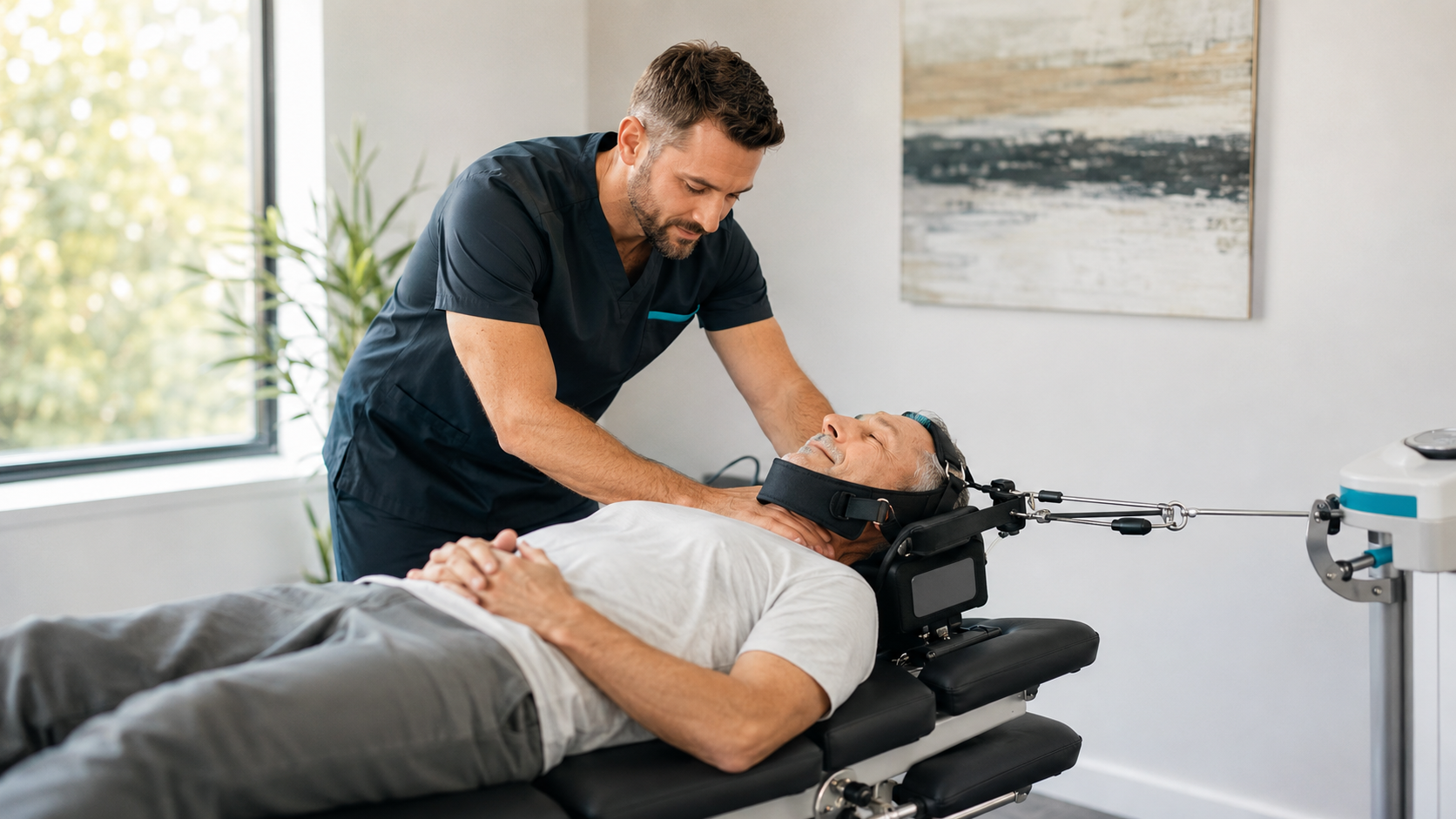
Your exam identifies the affected level and what it is irritating. Care often centers on spinal decompression, which gently creates space between the vertebrae, paired with supporting therapies and movement work to stabilize the area.
Taking pressure off the nerve can ease pain and radiating symptoms and help the disc recover, often without the need for surgery. Dr. Sarah Scharf builds a structured plan and is honest about what your specific disc is likely to need.
What's actually happening inside a bulging disc
Each disc in your spine is a two-part structure: a tough outer ring of woven fibers called the annulus, and a gel-like core called the nucleus that spreads pressure evenly, something like a water balloon inside a radial tire. Healthy, the pair absorbs enormous compressive force — every step, every lift, every hour in a chair.
Under years of sustained compression, the outer ring can weaken and develop small tears. The pressurized core then pushes into the weakened area and the disc wall bulges outward — or, in a herniation, core material breaks through entirely. The problem isn't really the bulge; it's the address. Directly behind each disc lies a nerve root, and a bulge in that direction can press on the nerve while leaked core material chemically irritates it. That combination produces the classic pattern: back or neck pain plus symptoms that travel — sciatica down the leg, or pain, numbness, and weakness into the arm and hand.
Here's the catch that makes discs so stubborn: they have almost no blood supply. A disc feeds itself through imbibition — a sponge-like exchange where changes in pressure draw fluid and nutrients in and out. A disc under constant compression can't pull in what it needs to repair, which is why time alone so often isn't enough.
Why disc symptoms behave the way they do
Understanding the mechanics explains the patterns patients notice — and why certain positions change everything.
Position changes the pressure
Sitting loads a lumbar disc considerably more than standing or walking, which is why long drives and desk days flare symptoms while gentle movement can ease them.
The nerve reports where it goes, not where it's hurt
A compressed nerve root produces symptoms along its entire path — so a disc at one level in your low back can burn in your calf, and one in your neck can tingle in your fingers.
Irritation is chemical as well as mechanical
Leaked nucleus material inflames the nerve even without hard pressure on it, which is one reason imaging findings and symptoms don't always match.
Non-surgical spinal decompression: the centerpiece
Decompression is designed to reverse the mechanics that created the bulge — gently, comfortably, and without surgery or injections.
Negative pressure inside the disc
A computer-controlled table applies a precise, gentle pulling force that cycles between tension and release. This drops the pressure inside the disc below zero — a mild vacuum effect that encourages bulging material to draw back toward the center, away from the nerve.
Restarting the disc's food supply
Each decompression cycle works like squeezing and releasing a sponge, pumping fluid, oxygen, and nutrients into a disc that constant compression has been starving. That imbibition effect is what gives the disc a genuine chance to repair.
Comfortable and specific
Sessions target the exact spinal level involved — lumbar or cervical — and most patients find them relaxing enough to close their eyes. There is no downtime afterward.
What surrounds the decompression work
Decompression creates the opening; the rest of the protocol helps your spine keep it.
Calming the irritated nerve
Class IV deep tissue laser therapy increases circulation and supports cellular repair around the inflamed nerve root, helping quiet the sharp, radiating component of the pain.
Restoring motion around the injured level
Gentle chiropractic care keeps the segments above and below moving well, so the healing disc isn't forced to compensate for stiff neighbors.
Building the guard rails
Core stabilization exercises and better lifting mechanics protect the repairing disc from the loads that injured it. Dr. Sarah Scharf will also tell you honestly if your disc looks like one of the few that needs more than conservative care.

Find out if your disc can recover without surgery
Most bulging and herniated discs respond to a structured decompression protocol — but the right plan starts with knowing exactly which level is involved and what it's pressing on. An evaluation gives you that answer and an honest read on your options.
Schedule your disc decompression consultationFAQFrequently Asked Questions
It is for patients with a herniated or bulging disc causing back, neck, or radiating limb pain who want a non-surgical option.
Care is comfortable and non-invasive, often built around gentle spinal decompression.
Discs heal slowly, so care usually runs over a structured series of visits set after your exam.
Some discs need more than conservative care, and we will tell you honestly if that looks likely.
There is no downtime. Many patients feel radiating symptoms ease as pressure comes off the nerve.
 Marin Joint Health
Lasting relief from knee and joint pain without surgery
If knee or joint pain is holding you back, our doctors treat the root cause, not just the symptoms, without surgery or drugs.