Treatment
Headache and Migraine Pain
Frequent headaches and migraines can quietly run your life. Care that addresses the neck and nervous system can help reduce how often they strike.
Many headaches and migraines are linked to tension and joint restriction in the neck and upper spine. When those structures are irritated, they can trigger or worsen head pain. Our care looks for those drivers rather than only chasing the symptom.
After assessing your neck, posture, and history, care may include gentle adjustments, soft-tissue work, and therapies that ease tension and calm the nervous system. The goal is to reduce both the frequency and intensity of episodes.
Addressing the physical contributors can mean fewer headaches and less reliance on medication for many patients. Dr. Sarah Scharf treats head pain as a signal worth tracing to its source, often in the neck and kinetic chain.
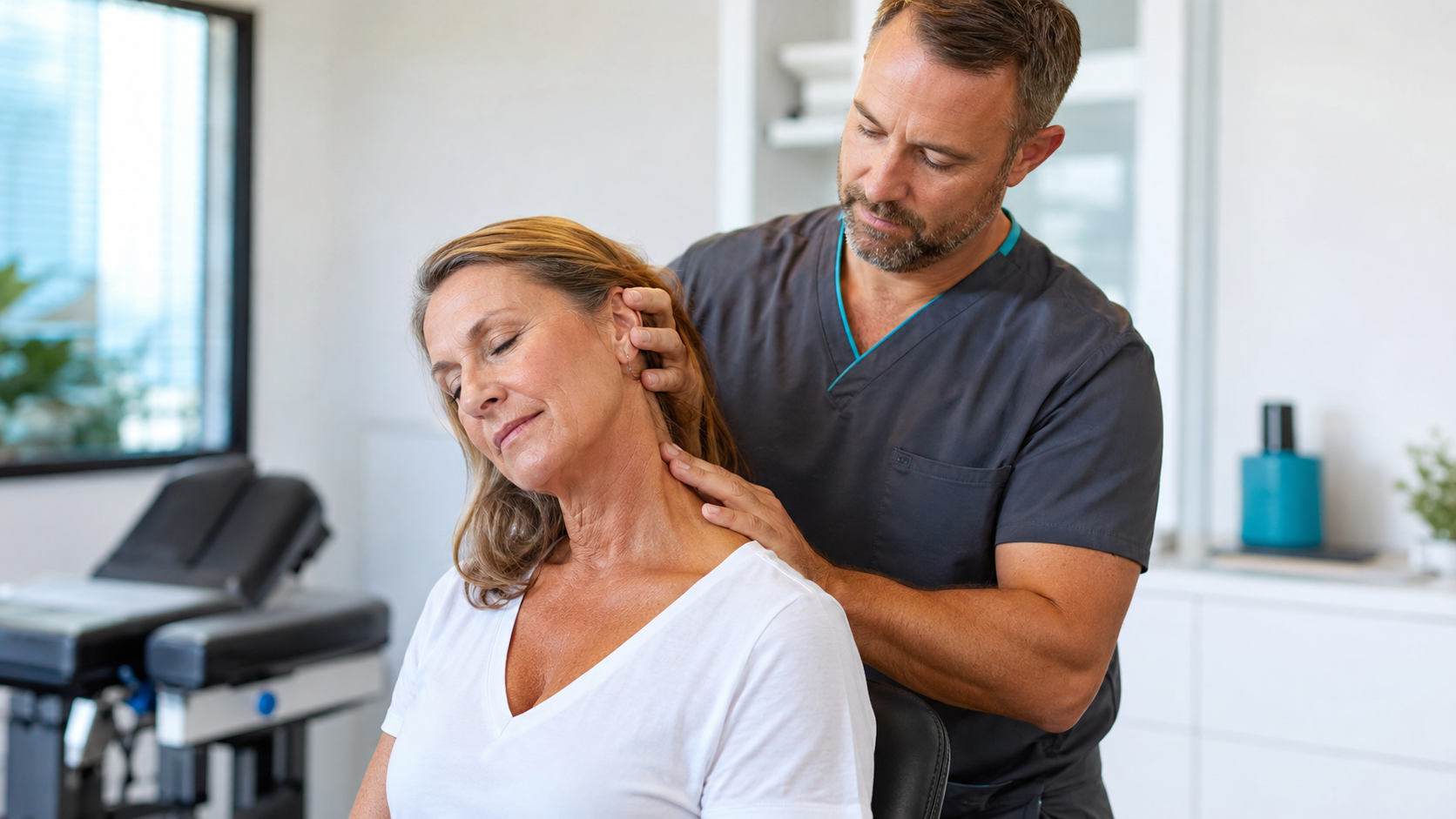
The neck's hidden role in head pain
Not every headache starts in your head. The top of your cervical spine — the three uppermost vertebrae and the joints between them — shares nerve wiring with your face and skull. Signals from those upper neck joints and from the trigeminal nerve of the head converge on the same relay station in the brainstem, and when that relay is flooded with input from an irritated neck, your brain can register it as head pain: behind the eye, at the temple, or wrapping over the top of the skull.
Two structures dominate this picture. The upper cervical facet joints, when restricted or inflamed, feed a steady stream of pain signals into that shared relay. And the suboccipital muscles — four small pairs at the base of the skull, among the most nerve-dense muscles in the body — clamp down during long screen sessions and stressful weeks, referring pain upward in the familiar band-around-the-head or behind-the-eye pattern.
To be clear about what we treat: migraine is a complex neurological condition, and we don't claim to cure it. What we address is the cervicogenic component — the neck-driven input that can trigger episodes, make them more frequent, or keep a headache pattern simmering. For tension-type and neck-driven headaches, that component is often most of the story; for many migraine patients, reducing it can mean a higher threshold before an episode starts.
How neck dysfunction feeds head pain
Three mechanisms, all testable during an exam, connect the upper neck to the head.
Restricted upper cervical joints
When the joints between your skull and top vertebrae lose normal motion, they generate a continuous irritation signal. Because of the shared brainstem relay, that input is frequently felt in the head rather than the neck.
Suboccipital muscle tension
These small skull-base muscles fine-tune head position and are packed with nerve sensors. Hours of forward-head screen posture keep them contracted, and their referral pattern maps onto classic headache territory.
Posture as a standing trigger
A head held forward multiplies load on exactly these joints and muscles, which is why headaches so often build across a workday and ease over a weekend.
Treating the cervicogenic component
Care is gentle, precise, and focused on the structures feeding the shared pain pathway — without long-term medication.
Restore upper cervical motion
Careful, low-force chiropractic adjustments free the restricted joints at the top of the spine, reducing the irritation signal at its source. Many patients notice their headache pattern shift as joint motion improves.
Release the suboccipital group
Targeted hands-on work, myofascial cupping, and Class IV laser therapy release the chronic grip of the skull-base muscles and calm the surrounding tissue.
Unload the whole neck
Where disc or nerve involvement adds to the picture, non-surgical cervical decompression relieves the underlying pressure so the upper neck isn't left compensating.
Raising your threshold over time
The goal isn't just easing today's headache — it's making episodes less frequent and harder to trigger.
Pattern tracking
Noting when episodes strike relative to desk time, sleep, and stress helps confirm how large the neck-driven component is — and shows progress as it shrinks.
Posture and daily habits
Screen setup, break rhythms, and a short daily mobility routine keep the suboccipitals and upper joints from re-loading between visits.
An honest assessment first
Dr. Sarah Scharf screens carefully, because not every headache is neck-driven — and if your pattern points elsewhere, we'll say so and help you find the right care.

Find out how much of your head pain starts in your neck
If your headaches build with desk time, begin at the base of your skull, or arrive with a stiff neck, the cervicogenic component may be significant — and treatable. An evaluation can usually tell you within the first visit.
Schedule your headache and neck evaluationFAQFrequently Asked Questions
It is for patients with frequent tension headaches or migraines who want to address the physical causes, not just mask them.
Care is gentle and hands-on, centered on the neck, posture, and tension that feed head pain.
Your plan depends on how often and how severe your headaches are, set after the exam.
Not every headache is neck-related, so we assess carefully and refer out when something else is going on.
There is no downtime. Many patients see episodes grow less frequent over a course of care.
 Marin Joint Health
Lasting relief from knee and joint pain without surgery
If knee or joint pain is holding you back, our doctors treat the root cause, not just the symptoms, without surgery or drugs.