
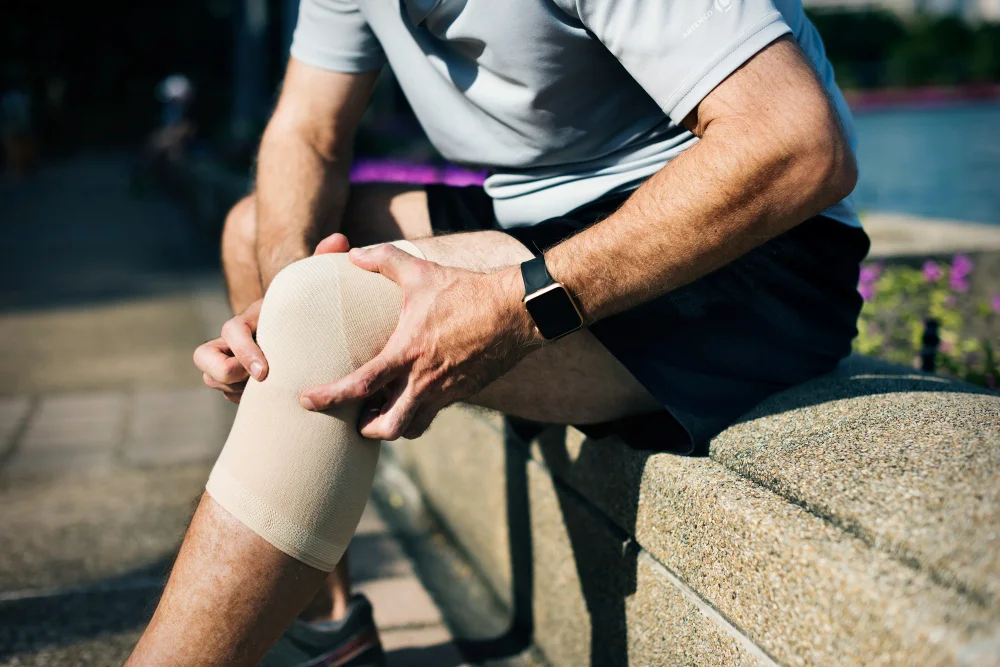
Exercise is one of the most evidence-supported treatments for knee osteoarthritis – but the type, intensity, and progression of exercise matters enormously. Done right, it reduces pain, rebuilds supporting muscle, and can slow the progression of joint degeneration. Done wrong, it accelerates damage and leaves patients worse off than when they started. At Marin Joint Health in Novato, the exercise component of our treatment approach is individualized and carefully sequenced for exactly this reason.
Why Exercise Helps Knee Osteoarthritis
It seems counterintuitive to load an already painful, degenerated joint. But the research on this is consistent: appropriate exercise reduces knee osteoarthritis pain and improves function in the majority of patients. Understanding why helps clarify what “appropriate” actually means.
Cartilage has no direct blood supply. It receives nutrients – and removes waste products – through the compression and decompression cycle of movement. Joint fluid is pumped in and out of the cartilage matrix as load is applied and released. Prolonged inactivity starves cartilage of this nutrient delivery mechanism, accelerating degeneration. Moderate, well-tolerated movement is literally how cartilage stays nourished.
Muscle strength is the other critical factor. The muscles surrounding the knee – particularly the quadriceps and hip abductors – act as the joint’s shock absorbers. Every pound of quad strength you build offloads compressive force from the joint surface. Patients with stronger quads consistently show slower rates of cartilage loss on imaging compared to those with weaker quads, independent of body weight.
Exercise also reduces the systemic and local inflammatory environment. It modulates inflammatory cytokines, improves blood flow to the periarticular tissues, and supports body weight management – all of which reduce the drivers of arthritic pain.
The Best Exercises for Knee Osteoarthritis
Straight Leg Raises
This is often the best starting point for patients whose knee pain makes any bending movement difficult. Lying on your back with one knee bent and the other straight, you tighten the quad of the straight leg and lift it to the height of the bent knee, then lower slowly. The knee never bends, so there’s no compressive load on the joint. But the quad is working against gravity and building strength with each repetition.
Straight leg raises are part of the personalized exercise programming Dr. Sarah Scharf builds into our 12-week knee pain protocol because they allow quad strengthening even when the knee is too irritated for any weight-bearing exercise.
Short Arc Quads
Lying on your back with a rolled towel under the knee to hold it at about 30-40 degrees of flexion, you straighten the knee fully and hold for a few seconds before lowering slowly. This works the terminal range of quad contraction – the range most inhibited in arthritic knees – with minimal joint compression because the arc of motion is small.
Seated Knee Extensions (Controlled Range)
Seated in a chair, extending the knee from 90 degrees toward full extension works the quad in a weight-bearing position without full joint loading. Keeping the movement slow and controlled, and stopping short of any range that produces pain, allows progressive loading as tolerance improves.
Hip Abductor Strengthening
Side-lying hip abduction – lying on your side and lifting the top leg – strengthens the gluteus medius and minimus that stabilize the pelvis and reduce valgus (inward collapsing) forces at the knee. These muscles are consistently weak in knee osteoarthritis patients, and strengthening them is often as important as quad work for reducing joint stress.
Clamshells – lying on your side with knees bent, rotating the top knee upward like a clamshell opening – are another effective hip abductor exercise that places no load on the knee joint itself.
Standing Hip Exercises
Once pain allows upright activity, standing hip extensions, abductions, and flexions with a light resistance band target the hip stabilizers with some proprioceptive challenge. These exercises train the hip muscles in the positions more relevant to walking and stair use.
Stationary Cycling
Cycling is one of the best moderate-intensity exercises for knee osteoarthritis patients. The circular motion lubricates the joint and strengthens the quad and hamstrings without the impact forces of walking or running. Seat height matters – the knee should be almost fully extended at the bottom of the pedal stroke to minimize peak flexion stress. Start with low resistance and build gradually.
Water Exercise and Swimming
Buoyancy removes most of the compressive load from the joint while allowing meaningful cardiovascular and strengthening work. Walking in chest-deep water, water cycling, or swimming are all excellent options for patients whose pain limits land-based activity. The resistance of the water also provides gentle strengthening stimulus without impact.
Step-Ups (Progressed Carefully)
Once basic strength is established, step-ups onto a low step challenge the quad and hip extensors in a functional pattern. Start with a very low step (4-6 inches), focus on slow controlled lowering (the eccentric phase), and progress step height gradually as strength and pain tolerance allow.
Exercises to Avoid or Approach Carefully
Not all exercise is beneficial for arthritic knees. Some common movements can accelerate damage or produce flares that set progress back significantly.
Deep Squats and Lunges
Full squats – particularly below parallel – place very high compressive forces on the knee joint and significant stress on the patellar tendon. For patients with significant cartilage loss or patellofemoral involvement, deep squatting can irritate the joint substantially. Shallow squats to 45-60 degrees are generally safer, but even these should be introduced carefully and only after basic quad strength is established.
Running on Hard Surfaces
High-impact activities like running on pavement transmit significant impact forces through the knee with every footfall. For patients with active osteoarthritis, this level of repeated impact generally exceeds what the joint can tolerate without increasing inflammation. If running is a goal, it should be reintroduced very gradually and only after joint mechanics and muscle support have been substantially improved.
Leg Press at Deep Knee Flexion
The leg press machine can be useful for quad strengthening, but only through a limited range. Pressing from 90 degrees of knee flexion down to full extension places increasing compressive forces on the patellofemoral joint as flexion increases. Keep the range shallow – no more than 60-70 degrees of flexion – and avoid heavy loads until strength and joint tolerance are well established.
High-Intensity Interval Training (Initially)
HIIT workouts involving jumping, rapid direction changes, or deep knee bending movements are typically too aggressive for arthritic knees, particularly in the early stages of a rehabilitation program. They can be reintroduced for appropriate patients much later in the process, but they’re not a starting point.
The Principle of Appropriate Loading
The concept that ties all of this together is appropriate loading. Arthritic cartilage needs load to stay nourished and to stimulate what repair capacity remains. Too little load produces degeneration through disuse. Too much load produces inflammation, pain, and accelerated wear. The goal is to find and gradually expand the zone in between.
That zone is different for every patient, which is why the exercise component of our knee pain treatment program at our Novato clinic is personalized rather than generic. The 12-week protocol includes video demonstrations and written instructions for a daily home exercise program specifically designed for each patient’s current capacity, with clear guidelines on progression.
Equally important: exercise alone rarely resolves significant knee osteoarthritis. The underlying inflammation, joint mechanics, and neuromuscular inhibition need to be addressed simultaneously for exercise to produce its full benefit. That’s why the exercise program is one component of a nine-therapy protocol rather than a standalone recommendation.
Getting Started
If you’re in Novato or anywhere in Marin County and you want a structured, personalized exercise plan that works alongside comprehensive knee treatment – rather than a generic list that may or may not be appropriate for your specific joint – we’d like to help.
Call (415) 818-0243 or schedule a consultation online. We’ll assess your current strength, range of motion, and pain patterns and build an exercise approach that fits where you actually are right now.