
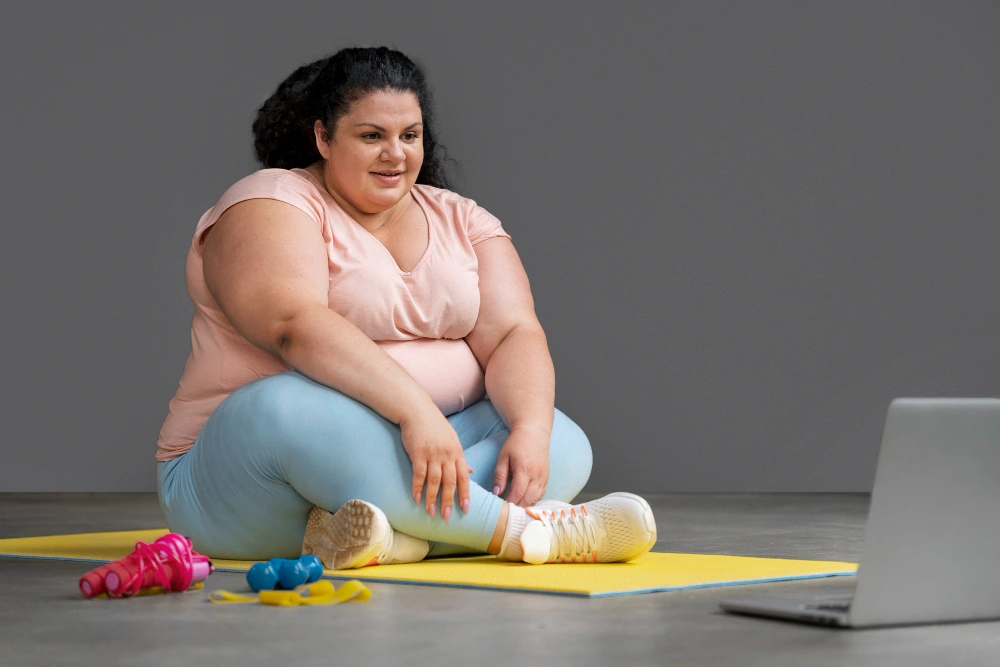
The connection between body weight and knee pain is more direct and more significant than most people realize. It’s not just that heavier people have more knee pain on average – it’s that the mechanical forces involved are multiplied in ways that accelerate joint damage with every step. At Marin Joint Health in Novato, addressing weight as part of a comprehensive knee pain treatment plan isn’t optional. For many patients throughout Marin County, it’s one of the most powerful levers they have.
The Mathematics of Weight and Knee Force
The knee joint doesn’t just support your body weight. It multiplies it. During normal walking, the force transmitted through the knee is roughly three to four times your body weight. Going up or down stairs increases that to four to six times. Squatting or rising from a chair can reach seven or eight times body weight on each knee.
The practical implication: every additional 10 pounds of body weight adds approximately 30-40 pounds of compressive force to the knee joint with each step on flat ground. On stairs, that same 10 pounds translates to 40-60 additional pounds of force per step.
Over the course of a typical day – 6,000 to 10,000 steps – that math accumulates into an enormous cumulative load difference. And it accumulates every single day, year after year, on cartilage that has a limited capacity to absorb and recover from that stress.
What Excess Load Does to Knee Cartilage
Articular cartilage – the smooth tissue covering the ends of the bones in the knee – is remarkably durable, but it isn’t indestructible. It has no blood supply of its own. It receives nutrients through the compression and release cycle of normal movement and through the synovial fluid that bathes the joint. When the compressive forces consistently exceed what the cartilage can handle, the breakdown process accelerates.
Cartilage wears progressively. The outer zones thin first. The surface becomes rougher, which increases friction and heat in the joint. The subchondral bone underneath begins to respond by thickening and developing bone spurs at the joint margins. This is the progression of knee osteoarthritis – and excess body weight is one of its most consistent accelerators.
Research has shown that obese individuals develop knee osteoarthritis at significantly higher rates and at younger ages than their normal-weight counterparts. More importantly, studies have consistently found that weight loss reduces knee pain and slows the progression of arthritic changes – not just by reducing mechanical load, but through additional pathways.
The Inflammatory Connection
Excess body fat isn’t just mechanically heavy. It’s metabolically active. Adipose tissue – particularly visceral fat – produces inflammatory cytokines including TNF-alpha, interleukin-6, and leptin. These inflammatory proteins circulate through the body and contribute to joint inflammation directly, independent of the mechanical load the weight places on the knee.
This explains something that puzzled researchers for years: why overweight patients have higher rates of knee osteoarthritis in both knees, including the non-dominant knee that carries slightly less load. The systemic inflammatory contribution of excess fat affects both joints, not just the more heavily loaded one.
For patients dealing with knee pain, this means that even modest weight loss reduces both the mechanical stress on the joint and the systemic inflammatory environment that’s amplifying the pain. The two effects compound each other.
How Much Weight Loss Makes a Difference?
The research here is encouraging. Studies have found that losing as little as 10-15 pounds produces measurable reductions in knee pain scores and functional improvements in patients with knee osteoarthritis. A landmark study found that each unit of BMI reduction was associated with a fourfold reduction in the risk of developing symptomatic knee osteoarthritis over an 8-year period.
The relationship isn’t linear – the first pounds lost tend to produce the most noticeable symptom relief, because you’re reducing peak joint loading during the highest-force activities. Patients who have struggled for years with knee pain and then achieve meaningful weight reduction often describe it as one of the most significant changes they’ve made for their joint health.
The Challenge: Knee Pain Makes Exercise Harder
Here’s the catch that most knee pain patients know well: knee pain makes the exercise needed for weight loss more difficult, more painful, and sometimes impossible. Walking hurts. Cycling may hurt. Any weight-bearing activity that would burn meaningful calories feels like it’s accelerating the joint damage you’re trying to prevent.
This creates a genuine trap. The weight is contributing to the knee pain. The knee pain prevents the activity that would reduce the weight. And rest, while it relieves symptoms short-term, often leads to further weight gain and muscle loss that worsens both the pain and the joint load.
Breaking out of this cycle requires addressing both sides simultaneously – reducing pain enough to make activity possible, while also providing structured support for meaningful weight management.
How We Address Both at the Same Time
At Marin Joint Health, the 12-week knee pain relief protocol and our weight loss program are complementary approaches that work together to break the cycle.
The protocol reduces knee pain through knee decompression, Class 4 laser therapy, shockwave, chiropractic care, and Trigenics – typically enough that patients can return to meaningful activity within the first few weeks. The daily home exercise component of the protocol is specifically designed to be low-impact and appropriate for patients with significant knee pain, building strength in the supporting muscles without exceeding the joint’s tolerance.
The anti-inflammatory nutrition guidance built into the protocol addresses inflammation from the dietary side – reducing pro-inflammatory foods and increasing the nutrients that support joint health and help regulate the metabolic pathways that drive fat storage and inflammation simultaneously. This isn’t just good for the knee. It supports body composition changes as well.
For patients where weight is a significant contributing factor, Dr. Sarah Scharf integrates weight management support with the knee treatment plan. The goal is to reduce the pain threshold enough that patients can become more active, while simultaneously providing the nutritional and lifestyle guidance that makes sustainable weight change possible.
Practical Starting Points for Knee-Friendly Activity
Not all exercise is equally stressful on the knee. For patients dealing with both knee pain and weight management goals, some activities are far more sustainable than others in the early stages:
Swimming and water exercise dramatically reduce joint loading while still allowing significant caloric expenditure and cardiovascular work. The buoyancy of water takes most of the compressive force off the knee, making it one of the best early-stage options for overweight patients with knee pain.
Cycling – particularly stationary cycling with proper seat height – places significantly less compressive load on the knee than walking, while still providing meaningful cardio and quad strengthening. Many patients find they can tolerate cycling comfortably even when walking is painful.
Seated resistance training allows upper body and some lower body work with minimal knee loading, preserving muscle mass and metabolic rate without stressing the knee joint.
The exercise component of our protocol is tailored to each patient’s current pain level and capacity. It progresses gradually as knee pain decreases and strength improves, allowing patients to take on more activity over the 12 weeks as their joint tolerates it.
A Whole-Person Approach to Knee Health
Weight and knee pain don’t exist in isolation from the rest of a person’s health. Blood sugar regulation, sleep quality, stress levels, and gut health all influence both body composition and joint inflammation. This is why our approach – rooted in the functional medicine perspective that Dr. Scharf brings through her A4M and IFM affiliations – looks at the full picture rather than treating the knee as a mechanical part to be fixed in isolation.
If you’re in Novato or anywhere across Marin County and you’re dealing with knee pain that has been made worse by carrying extra weight – or if you’ve noticed your knee pain has made it harder to stay active and manage your weight – we’d like to talk with you about a plan that addresses both.
Call (415) 818-0243 or schedule a consultation online. Payment plans are available for our treatment programs.