

Knee Pain
Rewrite the script between your brain and your knee.
Your brain, your biomechanics, and your knees. Time to rewrite the script.
Conservative care for knee and joint pain.
At a glance
Day one
A careful exam of the knee and the joints connected to it.
Non-surgical
No drugs, injections or downtime.
One system
Healing therapies paired with movement work.
At a glance
Knee pain, explained
01
What it is
Knee pain has many causes, from worn cartilage and old injuries to tendon trouble and arthritis. Whatever the source, it usually points to a knee that is inflamed, overloaded, or moving poorly. Because the knee is the center of what we do, Dr. Sarah Scharf, DC, has built a focused, non-surgical approach around it.
02
How it works
We start with a careful exam of the knee and the joints and muscles connected to it. From there, your plan pairs therapies that heal tissue, like shockwave, laser, and decompression, with movement work that fixes how the knee carries load. You progress through clear phases with measurable goals.
03
How it helps
Treating the cause instead of masking it is what makes relief last. Most patients are working toward walking, hiking, golf, pickleball, and keeping up with family without the knee in the way. The aim is durable function, not a brief window before the next flare.
Understand why you hurt
What if the problem isn’t just wear and tear?
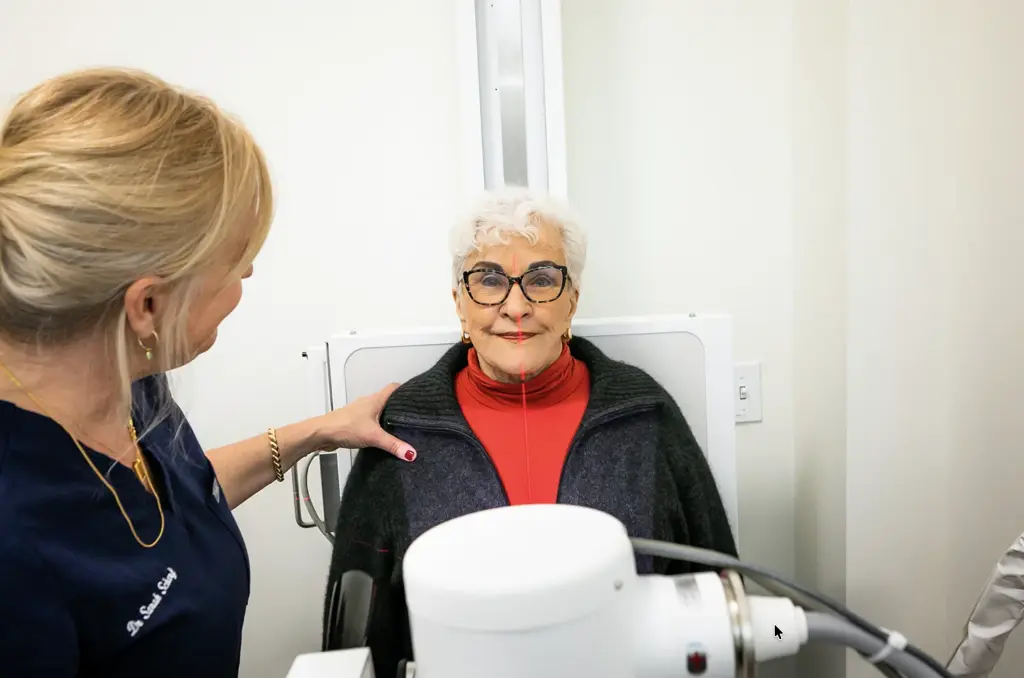
If you live with chronic knee pain, stiffness, or that frustrating feeling your knee might give out, you have probably been told your options are daily medications, temporary injections, or an eventual joint replacement.
But what if the real problem is a communication breakdown between your brain and your knee?
Trigenics® Myoneural Medicine is a gentle, non-surgical neurological treatment that restores the communication pathways between your brain and your joints to relieve pain, rebuild strength, and bring back fluid mobility.
Day one: we explain
Before any treatment, we show you what is driving your knee pain and what we plan to change.
Why it hurts
Why standard exercises feel like an uphill battle
When a knee is stressed or injured, the nerve sensors inside your muscles send panic signals to your brain. To protect you, your brain does two things.
01
It weakens and shuts down
Certain supporting muscles, like parts of your quads or hamstrings, get switched off.
02
It locks opposing muscles
Opposing muscles are locked into constant tightness to brace the joint.
03
Neurological inhibition
This is called neurological inhibition, and it is your body’s natural limp mode. Trying to strengthen a muscle while it is neurologically shut down is like pressing the gas pedal while the car is in park. Massage and stretching feel great in the moment, but they only give a temporary reset because they never fix the software glitch in the nervous system.
Who it’s for
Who Benefits Most
Trigenics is an exceptional fit for patients looking for a non-surgical path for the following.
Knee osteoarthritis and joint thinning
A non-surgical path that works with your nervous system, not around it.
Patellofemoral syndrome (runner’s knee)
Targets the neurological root of guarded, compensatory movement patterns.
Chronic tendonitis or meniscus wear
Helps restore muscle activation lost to protective inhibition.
Post-surgical stiffness, including trouble fully straightening or bending the knee
Gentle, non-surgical work on stiffness and range of motion. We’ll check whether this approach fits your recovery.
Honest about limits
When is knee surgery really the right call?
Some knees do need a surgeon. Dr. Scharf has spoken publicly about when surgery is the right next step and which conservative options are worth evaluating first. A consultation clarifies what makes sense for your case.
If conservative care isn’t the right fit, we tell you and refer you to the appropriate specialist.

Complete approach. Complete care.
The Trigenics reset: a software update for your movement
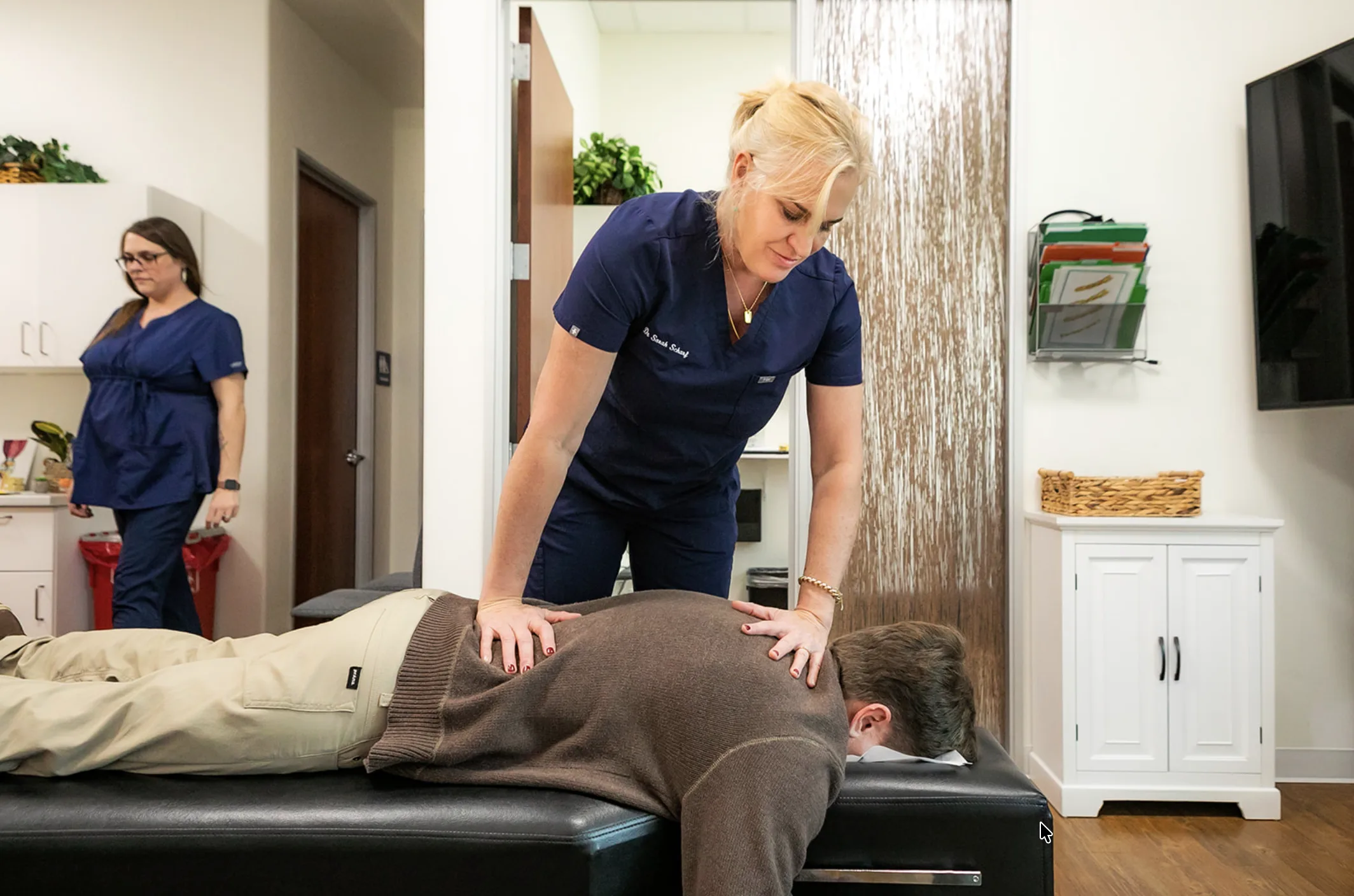
Trigenics is an interactive, cooperative therapy. Instead of lying passively on a table, you and Dr. Scharf work as a team to short-circuit old pain loops and remind your muscles how to track properly. These three inputs happen at the same time, by giving your brain these three gentle inputs at once, Trigenics helps reset the faulty neural loop. Your muscles can finally lengthen and activate properly, taking uneven pressure off your knee joint.
01
Your part: Resisted exercise neurology
You perform a gentle, specific resisted movement. This instantly catches your brain’s attention, helping your nervous system wake up weak muscles or relax overactive ones.
02
Our part: Muscle mechano-receptor manipulation
While you hold that light resistance, we apply targeted, hands-on stimulation to the nerve sensors within the muscle, melting away physical stress.
03
The synergy: Biofeedback focused breathing
You use a calm, diaphragmatic breathing pattern that settles your nervous system, lowering pain perception and helping your body heal.
You learn to manage it yourself: every visit ends with the home movements that keep your knee working between appointments.
Feel better. Live better.
Ready to Rewrite the Script?
Because this approach works directly with the fast-acting nervous system, most patients notice improved range of motion and real pain reduction during their very first visit. Schedule your knee evaluation to see if it fits your recovery.
Patient reviews
Finally explained. In their own words.
Read what patients have shared about their care.
-
I had an ongoing knee issue from an old ACL injury, and the team at Marin Joint Health provided wonderful care and effective treatment. My knee has improved significantly, and I now have much less pain. I'm so grateful for their expertise and highly recommend them to anyone dealing with similar issues.
-
I love the quality of care I’m receiving! And Dr. Scharf and her staff are wonderful! I’m so glad I signed up for this program to treat my knees, osteoarthritis and meniscus tears!
-
My experience has been transformative for me. My knee pain kept me from being active. I feel like I now have freedom to return to my life being active and healthy. The staff and patients make each visit so pleasant, there is a general feeling of positive healthy attitudes and healing shared during my visits. My only regret is not having found them sooner.
-
I had problems with my knees and it was painful to walk. I started treatment with Dr. Patrick and Gabriela, and now I walk much better and the pain is much less.
-
I have been coming to the clinic for three months. From arriving with excruciating pain in both knees I can now say that my knees are stable, mostly pain free, and I am getting stronger. My goal was to avoid surgery and stay active. Dr Scharf and her team Dr Chu and Gabriella are amazing. They are so dedicated to helping me feel better. I…
Individual results vary.
FAQ
Frequently Asked Questions
Still have questions? Call us and we’ll explain exactly how we can help.
It is for adults with chronic, recurring, or activity-related knee pain who want to avoid surgery, injections, or long-term medication.
Care is non-invasive and comfortable, and you leave each visit knowing what to do at home before the next one.
Knee pain that built up over years takes time to undo. Most plans run several weeks to a few months, set after your first exam.
Knee pain often involves the whole chain, so your plan may address the hips, feet, and spine too.
There is no downtime. Many patients feel early relief, with bigger gains as tissue heals and movement improves.

Feel better. Live better.
Finally understand why you hurt—and what you can do about it.
We explain what we find, build a complete conservative plan and teach you how to stay ahead of it for life.