
Home Services Non-Invasive Chiropractic Care
Non-Invasive Chiropractic Care
Low-force care. No surgery. Keep moving.
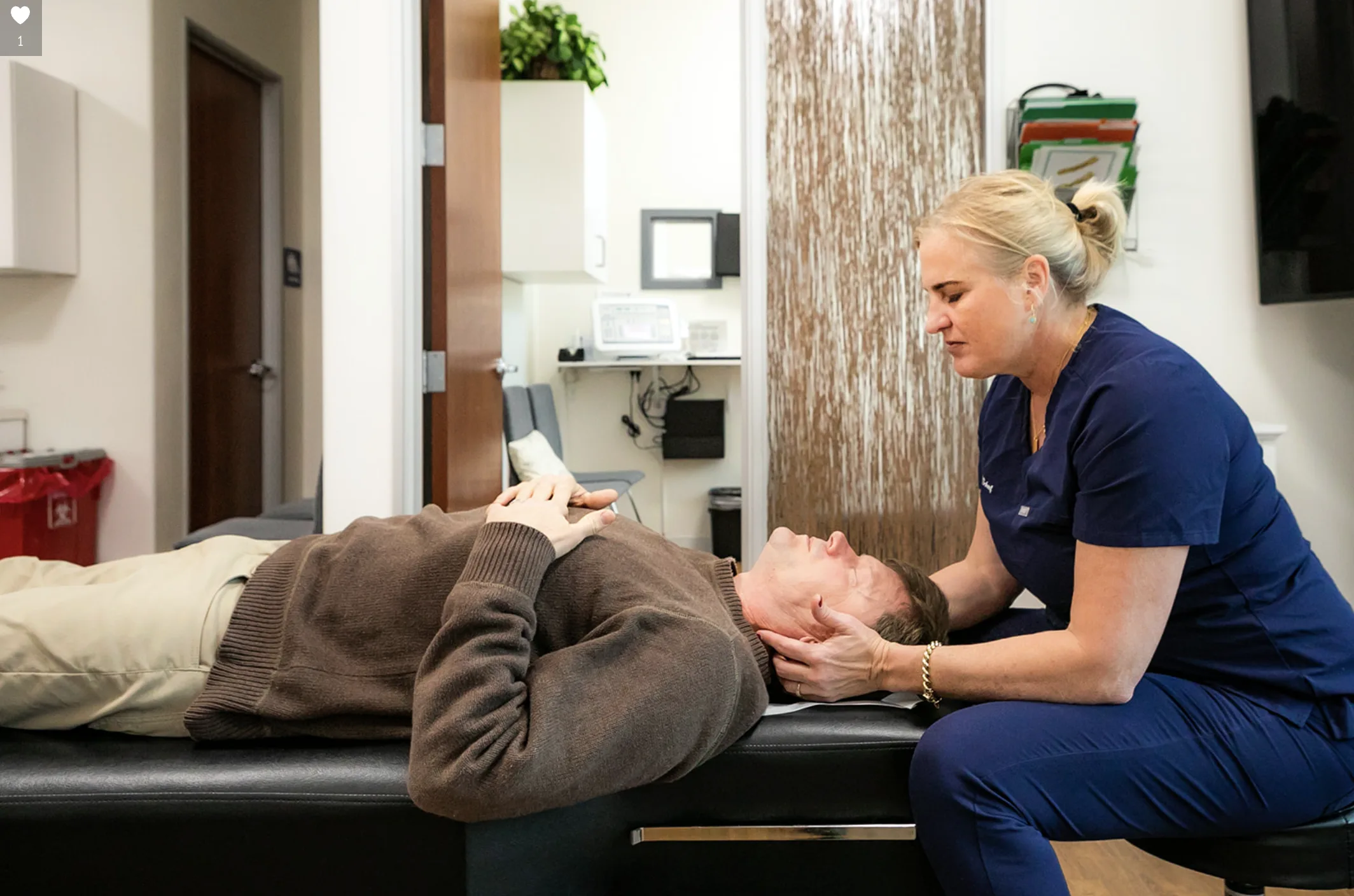
You are looking for a measured approach to ongoing joint care. Gentle, low-force chiropractic care corrects the problem without the twist or the crack, and we explain every step.
Conservative care for knee and joint pain.
At a glance
Low force
Instrument-assisted and drop-table adjusting.
Day one
We show you what’s off, and why it hurts.
No downtime
Get on with your day.
At a glance
Non-invasive chiropractic care, explained
01
What it is
Non-invasive chiropractic care uses hands-on adjustments and gentle therapies to relieve pain and restore movement without drugs or procedures. It is the foundation of everything we do. For people who want to avoid invasive routes, it offers a safe, conservative path to feeling better.
02
How it works
After a thorough exam, care is tailored to your body and your goals. Adjustments restore proper joint motion, while supporting therapies calm pain and aid healing. Nothing involves needles, medication or recovery from a procedure, so you can usually get on with your day.
03
How it helps
Many people are looking for something between living with pain and going under the knife. Conservative care fills that gap by helping the body move and heal on its own. It reflects the patient-first philosophy our practice is built around.
Understand why you hurt
Alignment Is About Load, Not Cracking Backs
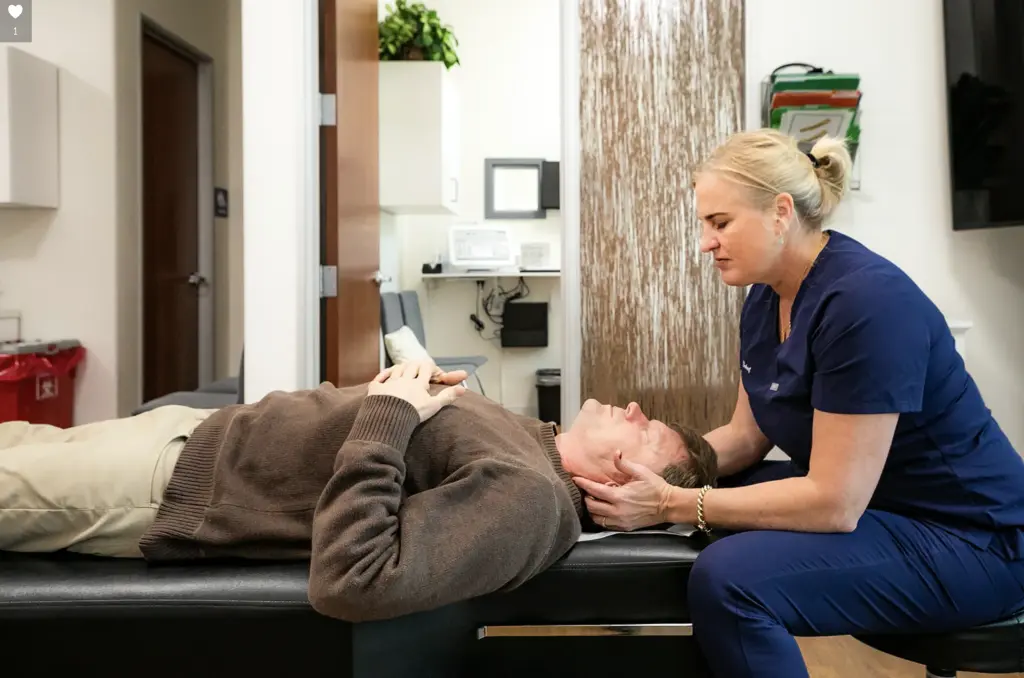
When people picture a chiropractic adjustment, they usually picture force: a firm twist and an audible pop. That image keeps a lot of people who could benefit from care away from it. The truth is that the goal of an adjustment has nothing to do with the sound and everything to do with how a joint shares its workload.
Think of alignment as load distribution. A joint is designed to carry force evenly across its surfaces. When a vertebra or a joint sits slightly off its ideal position, the load stops being shared evenly. One region gets overworked and irritated while another goes quiet, and over time that uneven wear becomes pain and stiffness. Correcting the position simply restores an even, balanced distribution of load.
Once you understand that, it becomes clear that the force is optional. The correction is what matters. That is the whole idea behind gentle, low-force adjusting: reach the same result without the twist, the crack or the apprehension.
Day one: we explain
On day one we show you which joint is carrying more than its share, and how we’ll correct it gently.

How it works
How Low-Force Adjusting Works
Gentle adjusting achieves precise, targeted corrections using specific, controlled input rather than manual thrust.
01
Instrument-assisted adjusting
A small handheld instrument delivers a quick, precisely measured impulse to a single joint. It is fast, light and specific: the correction happens without the broad manual movement people tend to dread.
02
Drop-table technique
Sections of a specialized table are set to release slightly as a gentle pressure is applied, letting gravity assist the correction. The input you feel is light; the table does much of the work.
03
Precise, not forceful
Because these methods are so targeted, our doctors can address a specific joint without moving everything around it, a real advantage for sensitive patients and delicate regions.
Who it’s for
Who Low-Force Care Is For
Gentle adjusting opens conservative care to people for whom traditional manual technique is a non-starter.
People who dislike manual adjusting
If the pop is the reason you have avoided chiropractic care, low-force technique removes that barrier entirely while still correcting the fault.
Sensitive or cautious bodies
For those who feel guarded, tense easily or simply prefer a lighter touch, gentle input lets the body accept the correction instead of bracing against it.
Anyone wanting a conservative first step
For people seeking a non-surgical approach, low-force adjusting is a measured place to begin.
Honest about limits
Conservative first, not conservative only.
If your exam shows that chiropractic care isn’t the right tool, we tell you and refer you to someone who can help. We only keep treating what we believe we can actually fix.
That honesty is why surgeons and MDs refer their pre-surgical patients to us.
Complete approach. Complete care.
How It Fits Your Care
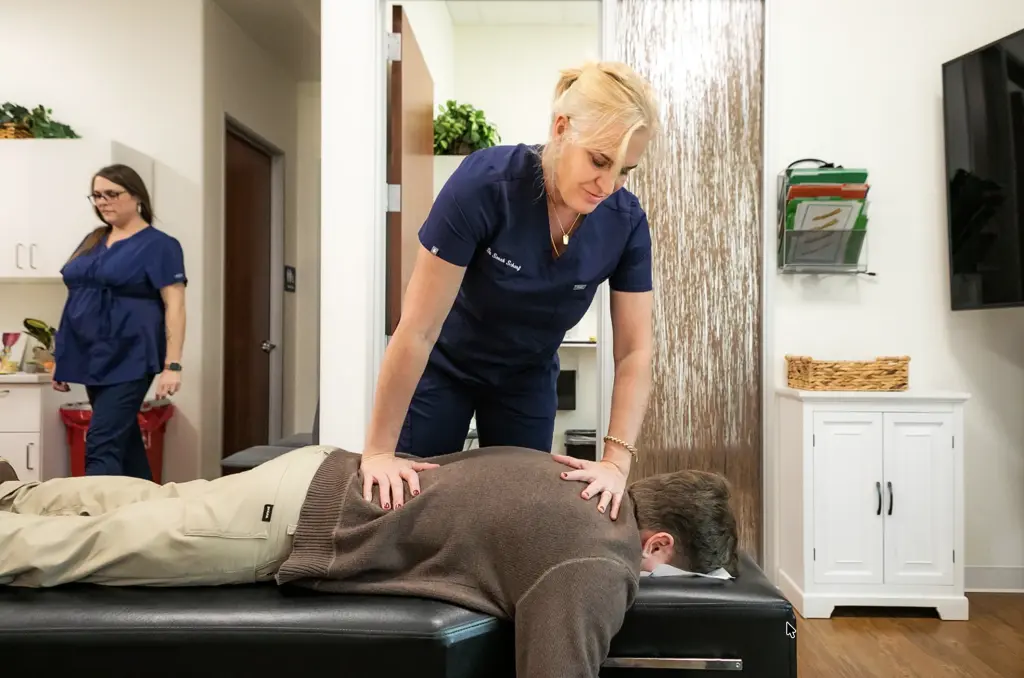
Gentle adjusting is the hands-on foundation the rest of your plan is built on.
01
The base layer of restorative care
Restoring balanced joint motion makes nearly everything else work better: soft-tissue therapies release more easily and strengthening builds on a joint that is moving well.
02
Comfortable and without downtime
Sessions are relaxing rather than something to brace for, and there is no recovery afterward. You get on with your day.
03
Rewards consistency
Because the corrections are gentle, regular care helps the improved alignment settle in and hold, with progress building across your plan.
You learn to manage it yourself: you leave with the home exercises that help your alignment hold between visits, and the understanding of why they work.
Feel better. Live better.
Relief Without the Twist or the Crack
If the only thing standing between you and chiropractic care is a dislike of manual adjusting, there is a gentler way to get the same correction. Let’s find the approach that suits you.
Patient reviews
Finally explained. In their own words.
Read what patients have shared about their care.
-
I was very skeptical, at first, about Marin Joint Health due to my unsuccessful search for treatment for my prolonged severe amount of pain. Having just completed two months of treatment, I am a true believer! Dr. Scharf for her comprehensive diagnosis and Dr. Jay for his incredible hands-on physical therapy, as well as Gabby for being an excellent technician, have made my treatments successful…
-
I had an ongoing knee issue from an old ACL injury, and the team at Marin Joint Health provided wonderful care and effective treatment. My knee has improved significantly, and I now have much less pain. I'm so grateful for their expertise and highly recommend them to anyone dealing with similar issues.
-
I highly recommend Marin Joint Health. I have had some really great results working with Dr. Scharf and her incredible team. In my experience, all the staff are confident, knowledgeable, easy to deal with, and very cheerful. Thank you.
-
Having my knee treated at Marin Joint Health is one of the best decisions I've ever made. My knee pain is gone and I'm walking again easily and enjoying it. Thank you Dr. Sara Scharf, you are amazing.
-
Marin Joint Health has helped me find relief from the discomfort of neuropathy. Dr Sharf and her excellent staff care about their patients well being. Treatment plan includes full body adjustment to ensure sustained spinal health.
-
I love the quality of care I’m receiving! And Dr. Scharf and her staff are wonderful! I’m so glad I signed up for this program to treat my knees, osteoarthritis and meniscus tears!
-
This medical team is 100% dedicated to healing patients. Their approach is holistic and delivered with utmost care and “sweet” loving words. I hope to dance flamenco soon in their honor!
-
Love the fact that everyone here are with a positive attitude and always smiling. The attention that they give you its amazing. I definitely recommend everyone .
-
Awesome place to come in and receive chiropractic care. My first neck adjustment made me feel so much better. Dr Scarf DC is a pro!!!
-
I have found the staff knowledgeable, caring, and more than willing to explain and answer questions. I am excited to be treated with researched alternative therapies instead of surgery.
-
Dr. Scharf is the best! Every experience is unique and amazing. She is always in tune with me, and I feel blessed to be under her care.
-
My rate for them is 5 stars also. I recommended so much because in the first 3 visits I have no pain in my knees, The staff is very helpful and very professional.
Individual results vary.
FAQ
Frequently Asked Questions
Still have questions? Call us and we’ll explain exactly how we can help.
It is for people interested in conservative chiropractic care, including those who prefer low-force techniques to traditional manual adjusting.
Visits are comfortable and hands-on. We explain what we are correcting and why, and most people find the care relaxing rather than something to dread.
The number of visits depends on your condition and goals, which we map out together after your exam. You leave day one knowing the plan and the reason for it.
Conservative care rewards consistency. Following your home program between visits makes a real difference.
There is no downtime. Progress builds across your plan, and we show you what is changing as it happens.
No. Our goal is for you to understand your body and maintain your results yourself. Tune-up visits are optional, never a requirement.

Feel better. Live better.
Finally understand why you hurt—and get your life back
We explain what’s wrong, build a complete conservative plan and teach you how to stay ahead of it for life.