
Home Services Herniated & Bulging Disc Pain
Herniated and Bulging Disc Pain
Relieve the pressure without surgery.
A herniated or bulging disc can send pain, numbness, or weakness down your arm or leg. We relieve the pressure without surgery.
Conservative care for knee and joint pain.
At a glance
Day one
We identify which level is involved and what it’s pressing on.
Decompression
Gentle, comfortable, specific to your disc.
Non-surgical
No injections, no downtime.
At a glance
Herniated and bulging disc pain, explained
01
What it is
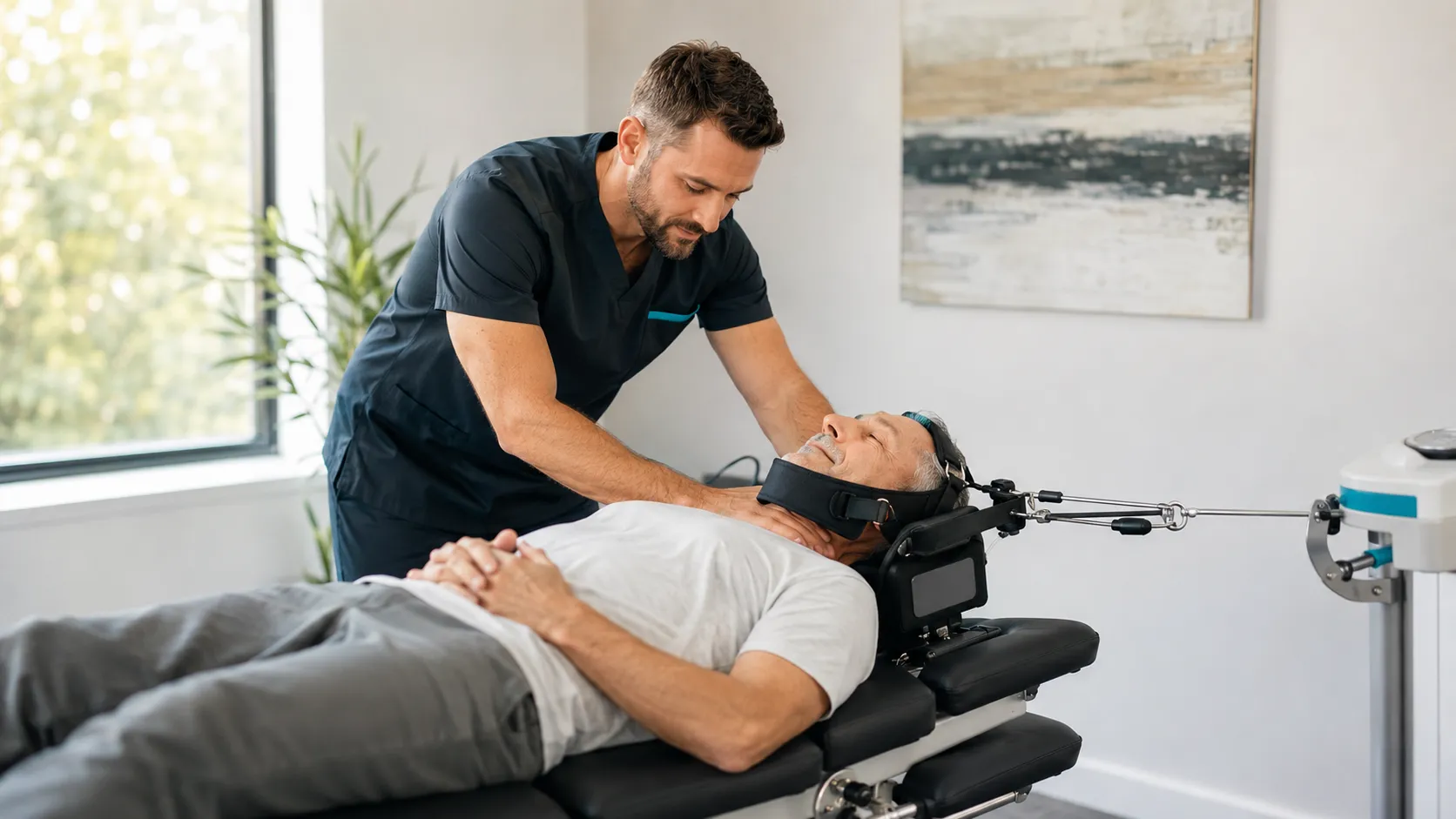
A herniated or bulging disc happens when a spinal disc pushes out of place and presses on nearby nerves. That can cause back or neck pain along with radiating symptoms into the limbs. Our care is non-surgical and aimed at relieving that pressure.
02
How it works
Your exam identifies the affected level and what it is irritating. Care often centers on spinal decompression, which gently creates space between the vertebrae, paired with supporting therapies and movement work to stabilize the area.
03
How it helps
Taking pressure off the nerve can ease pain and radiating symptoms and help the disc recover, often without the need for surgery. Dr. Sarah Scharf, DC, builds a structured plan and is honest about what your specific disc is likely to need.
Understand why you hurt
What’s actually happening inside a bulging disc
Each disc in your spine is a two-part structure: a tough outer ring of woven fibers called the annulus, and a gel-like core called the nucleus that spreads pressure evenly, something like a water balloon inside a radial tire. Healthy, the pair absorbs enormous compressive force, every step, every lift, every hour in a chair.
Under years of sustained compression, the outer ring can weaken and develop small tears. The pressurized core then pushes into the weakened area and the disc wall bulges outward, or, in a herniation, core material breaks through entirely. The problem isn’t really the bulge; it’s the address. Directly behind each disc lies a nerve root, and a bulge in that direction can press on the nerve while leaked core material chemically irritates it. That combination produces the classic pattern: back or neck pain plus symptoms that travel, sciatica down the leg, or pain, numbness, and weakness into the arm and hand.
Here’s the catch that makes discs so stubborn: they have almost no blood supply. A disc feeds itself through imbibition, a sponge-like exchange where changes in pressure draw fluid and nutrients in and out. A disc under constant compression can’t pull in what it needs to repair, which is why time alone so often isn’t enough.
Day one: we explain
Before any treatment, we show you exactly which disc is involved and what we’re going to change.
What’s going on
Why disc symptoms behave the way they do
Understanding the mechanics explains the patterns patients notice, and why certain positions change everything.
01
Position changes the pressure
Sitting loads a lumbar disc considerably more than standing or walking, which is why long drives and desk days flare symptoms while gentle movement can ease them.
02
The nerve reports where it goes, not where it’s hurt
A compressed nerve root produces symptoms along its entire path, so a disc at one level in your low back can burn in your calf, and one in your neck can tingle in your fingers.
03
Irritation is chemical as well as mechanical
Leaked nucleus material inflames the nerve even without hard pressure on it, which is one reason imaging findings and symptoms don’t always match.
How we help
Non-surgical spinal decompression: the centerpiece
Decompression is designed to reverse the mechanics that created the bulge, gently, comfortably, and without surgery or injections.
Negative pressure inside the disc
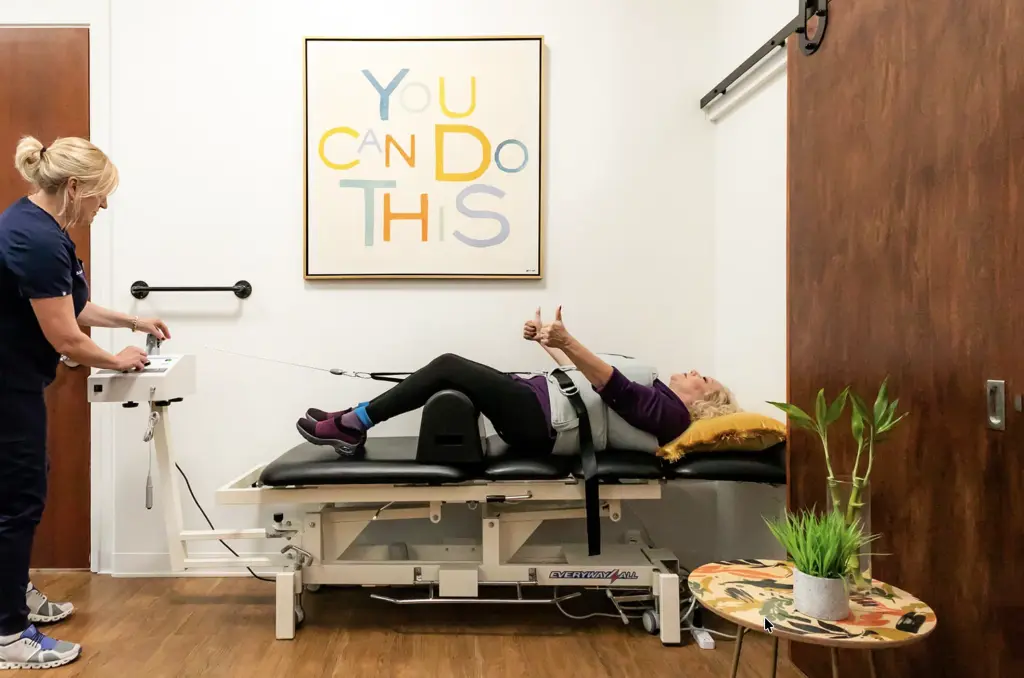
A computer-controlled table applies a precise, gentle pulling force that cycles between tension and release. This drops the pressure inside the disc below zero, a mild vacuum effect that encourages bulging material to draw back toward the center, away from the nerve.
Restarting the disc’s food supply
Each decompression cycle works like squeezing and releasing a sponge, pumping fluid, oxygen, and nutrients into a disc that constant compression has been starving. That imbibition effect is what gives the disc a genuine chance to repair.
Comfortable and specific
Sessions target the exact spinal level involved, lumbar or cervical, and most patients find them relaxing enough to close their eyes. There is no downtime afterward.
Honest about limits
If your problem needs more than conservative care, we’ll tell you.
Some problems need a different plan, and a few need a specialist or a surgeon. If your exam shows that, we say so on day one and refer you on, before you invest in care that won’t help.
If conservative care isn’t the right fit, we tell you and refer you to the appropriate specialist.
Complete approach. Complete care.
What surrounds the decompression work
Decompression creates the opening; the rest of the protocol helps your spine keep it.
01
Calming the irritated nerve
Class IV deep tissue laser therapy increases circulation and supports cellular repair around the inflamed nerve root, helping quiet the sharp, radiating component of the pain.
02
Restoring motion around the injured level
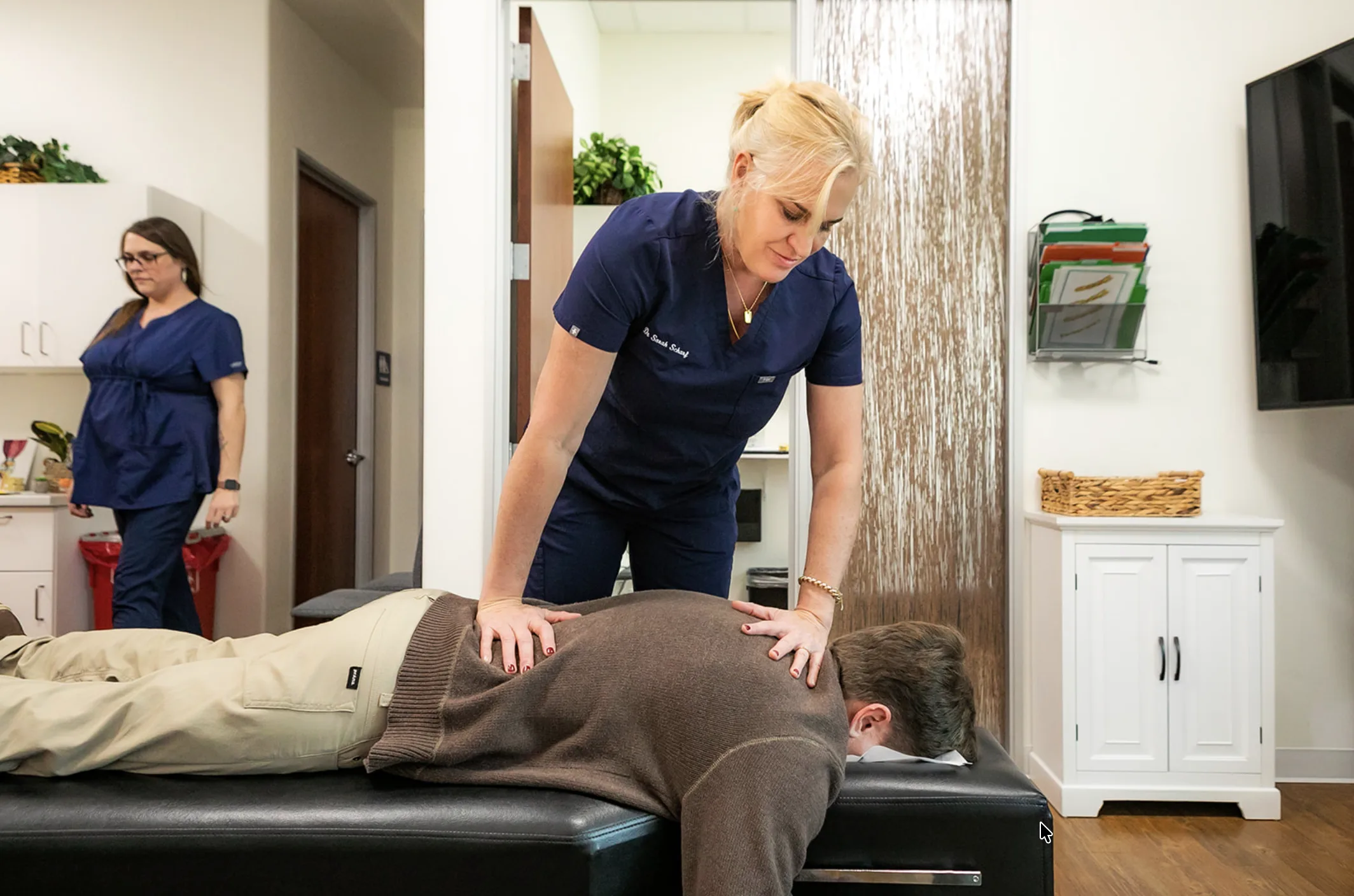
Gentle chiropractic care keeps the segments above and below moving well, so the healing disc isn’t forced to compensate for stiff neighbors.
03
Building the guard rails
Core stabilization exercises and better lifting mechanics protect the repairing disc from the loads that injured it. Dr. Sarah Scharf, DC, will also tell you honestly if your disc looks like one of the few that needs more than conservative care.
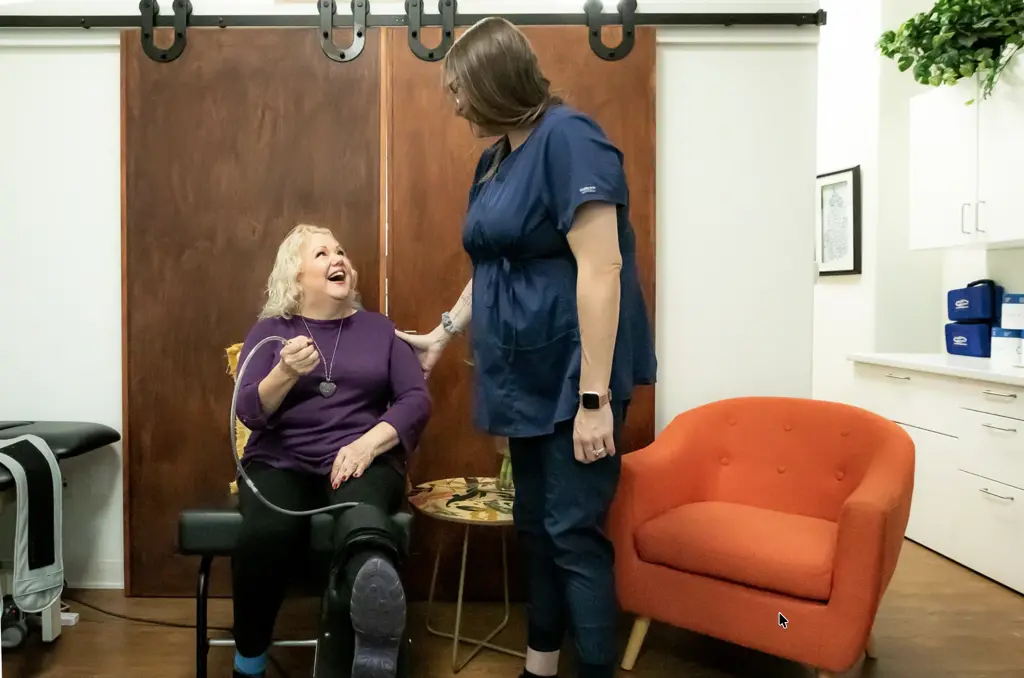
You learn to manage it yourself: every step comes with the habits and movements that protect your spine long after your plan ends.
Feel better. Live better.
Find out if your disc can recover without surgery
Most bulging and herniated discs respond to a structured decompression protocol, but the right plan starts with knowing exactly which level is involved and what it’s pressing on. An evaluation gives you that answer and an honest read on your options.
Patient reviews
Finally explained. In their own words.
Read what patients have shared about their care.
-
I had an ongoing knee issue from an old ACL injury, and the team at Marin Joint Health provided wonderful care and effective treatment. My knee has improved significantly, and I now have much less pain. I'm so grateful for their expertise and highly recommend them to anyone dealing with similar issues.
-
I love the quality of care I’m receiving! And Dr. Scharf and her staff are wonderful! I’m so glad I signed up for this program to treat my knees, osteoarthritis and meniscus tears!
-
My experience has been transformative for me. My knee pain kept me from being active. I feel like I now have freedom to return to my life being active and healthy. The staff and patients make each visit so pleasant, there is a general feeling of positive healthy attitudes and healing shared during my visits. My only regret is not having found them sooner.
-
I had problems with my knees and it was painful to walk. I started treatment with Dr. Patrick and Gabriela, and now I walk much better and the pain is much less.
-
I have been coming to the clinic for three months. From arriving with excruciating pain in both knees I can now say that my knees are stable, mostly pain free, and I am getting stronger. My goal was to avoid surgery and stay active. Dr Scharf and her team Dr Chu and Gabriella are amazing. They are so dedicated to helping me feel better. I…
Individual results vary.
FAQ
Frequently Asked Questions
Still have questions? Call us and we’ll explain exactly how we can help.
It is for patients with a herniated or bulging disc causing back, neck, or radiating limb pain who want a non-surgical option.
Care is comfortable and non-invasive, often built around gentle spinal decompression.
Discs heal slowly, so care usually runs over a structured series of visits set after your exam.
Some discs need more than conservative care, and we will tell you honestly if that looks likely.
There is no downtime. Many patients feel radiating symptoms ease as pressure comes off the nerve.

Feel better. Live better.
Finally understand why you hurt—and what you can do about it.
We explain what we find, build a complete conservative plan and teach you how to stay ahead of it for life.