
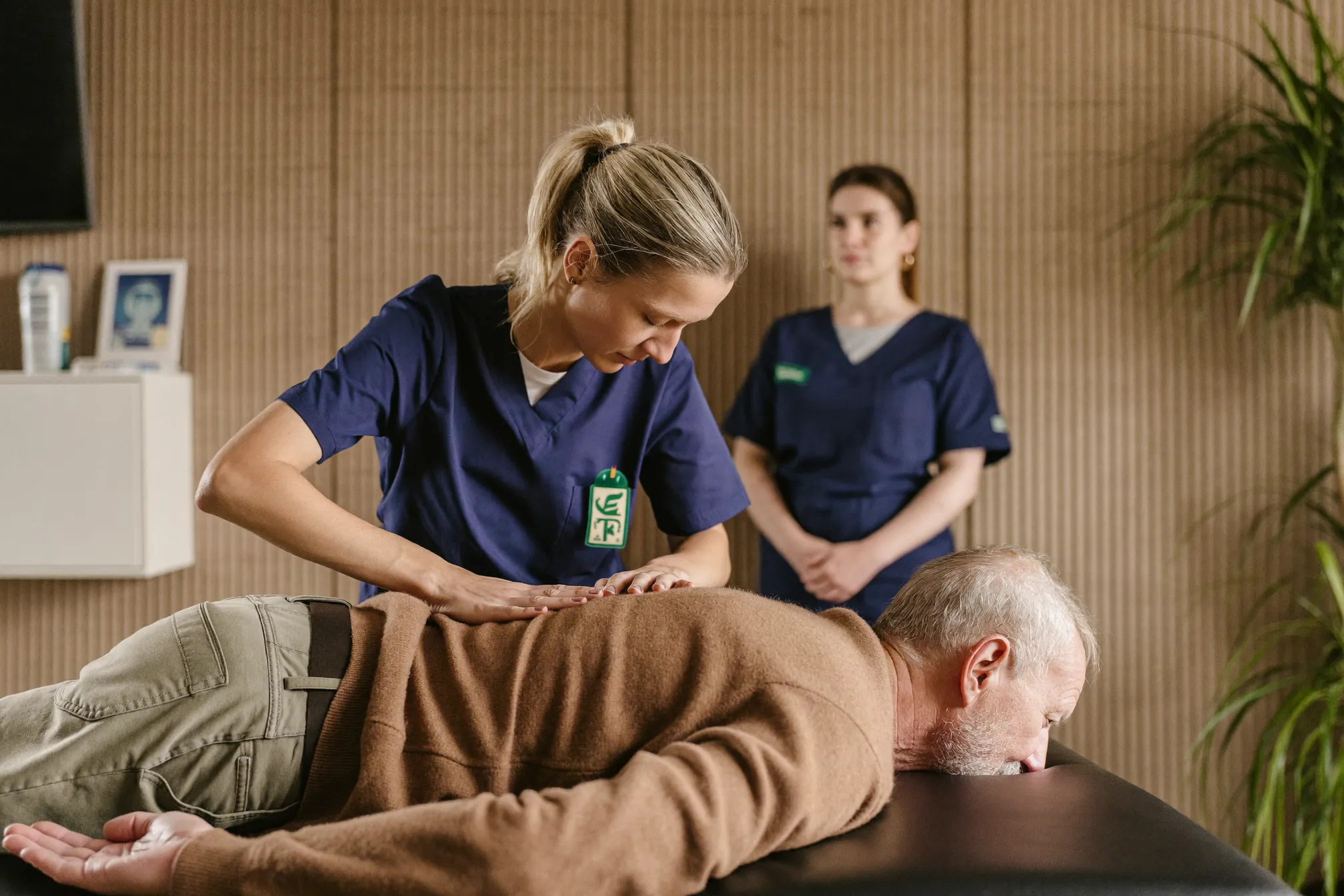
Back Pain
Unload, calm, rebuild.
Back pain has a way of touching everything you do. We focus on the cause so you can bend, lift, and move through your day with less of it.
Conservative care for knee and joint pain.
At a glance
Day one
We find which structures are carrying too much.
Three steps
Unload the spine, calm the tissue, rebuild support.
No downtime
Non-surgical, drug-free care.
At a glance
Back pain, explained
01
What it is
Back pain can stem from disc problems, joint restriction, muscle strain, or nerve compression. It ranges from a dull ache to sharp, limiting pain. Our approach is conservative and non-surgical, aimed at the underlying problem.
02
How it works
Your exam looks at your spine, posture, and movement. From there, care may combine spinal decompression, adjustments, soft-tissue therapy, and movement work to relieve pressure and rebuild support. You move through clear stages.
03
How it helps
Relieving pressure and restoring healthy movement helps reduce pain and keeps the back more resilient. Because the spine anchors the whole kinetic chain, easing back trouble often helps the hips and knees too. Dr. Sarah Scharf, DC, builds care around lasting change.
Understand why you hurt
How a healthy back shares the load, and what happens when it can’t
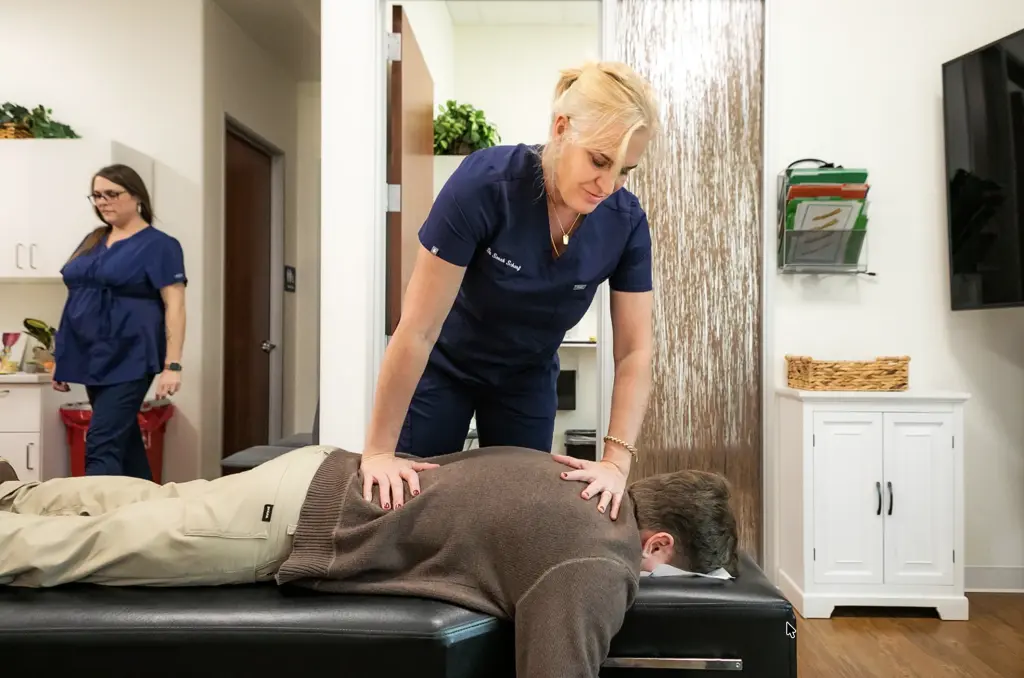
Your lower back is built to distribute force, not absorb it in one place. Each spinal segment shares the work: the discs act as fluid-filled cushions that handle compression, the facet joints, the small paired joints at the back of each vertebra, guide and limit motion, and the nerve roots exit through openings between them, expecting a clear path. Layers of muscle and fascia coordinate the whole structure through every bend and lift.
Back pain usually starts when that load-sharing breaks down. Hours of sitting, repetitive lifting, or gradual disc thinning shift force onto structures that weren’t designed to carry it: facet joints get compressed and inflamed, discs lose height under sustained pressure, and the openings where nerve roots pass can narrow enough to irritate them. Your body responds by tightening the surrounding muscles into a protective brace, helpful for a day or two, but that guarding itself compresses the spine further and restricts the very movement your discs rely on.
That’s why rest alone so often disappoints. Lying low can calm a flare-up, but it doesn’t redistribute the load that caused it, and discs, which have almost no blood supply, actually depend on movement to draw in fluid and nutrients. Lasting relief means restoring how your spine shares force, not just waiting out the pain.
Day one: we explain
Before any treatment, we show you where your back pain is actually coming from, and what we’re going to change.
What’s going on
Where the pain is actually coming from
A thorough exam looks at four structures that trade load back and forth. Any of them can be the primary pain generator, and they rarely fail alone.
01
Discs under sustained compression
When you sit or lift for hours, disc pressure stays elevated and fluid slowly squeezes out. A thinner disc handles shock poorly and passes more force to the joints behind it.
02
Facet joints taking over
These small joints are built to guide motion, not bear weight. When disc height drops or posture shifts load backward, they become inflamed and produce that focal ache that worsens when you arch or twist.
03
Nerve roots losing their space
A bulging disc or a narrowed opening can press on or chemically irritate a nerve root, sending pain, tingling, or weakness into the hip or leg.
04
Muscle guarding that overstays its welcome
Protective tightness is your nervous system splinting the area. Left running for weeks, it compresses the spine, restricts blood flow, and becomes a pain source of its own.
How we help
The treatment sequence: unload, calm, rebuild
Care moves through phases, each preparing the spine for the next, without surgery, injections, or long-term medication.
Unload the spine
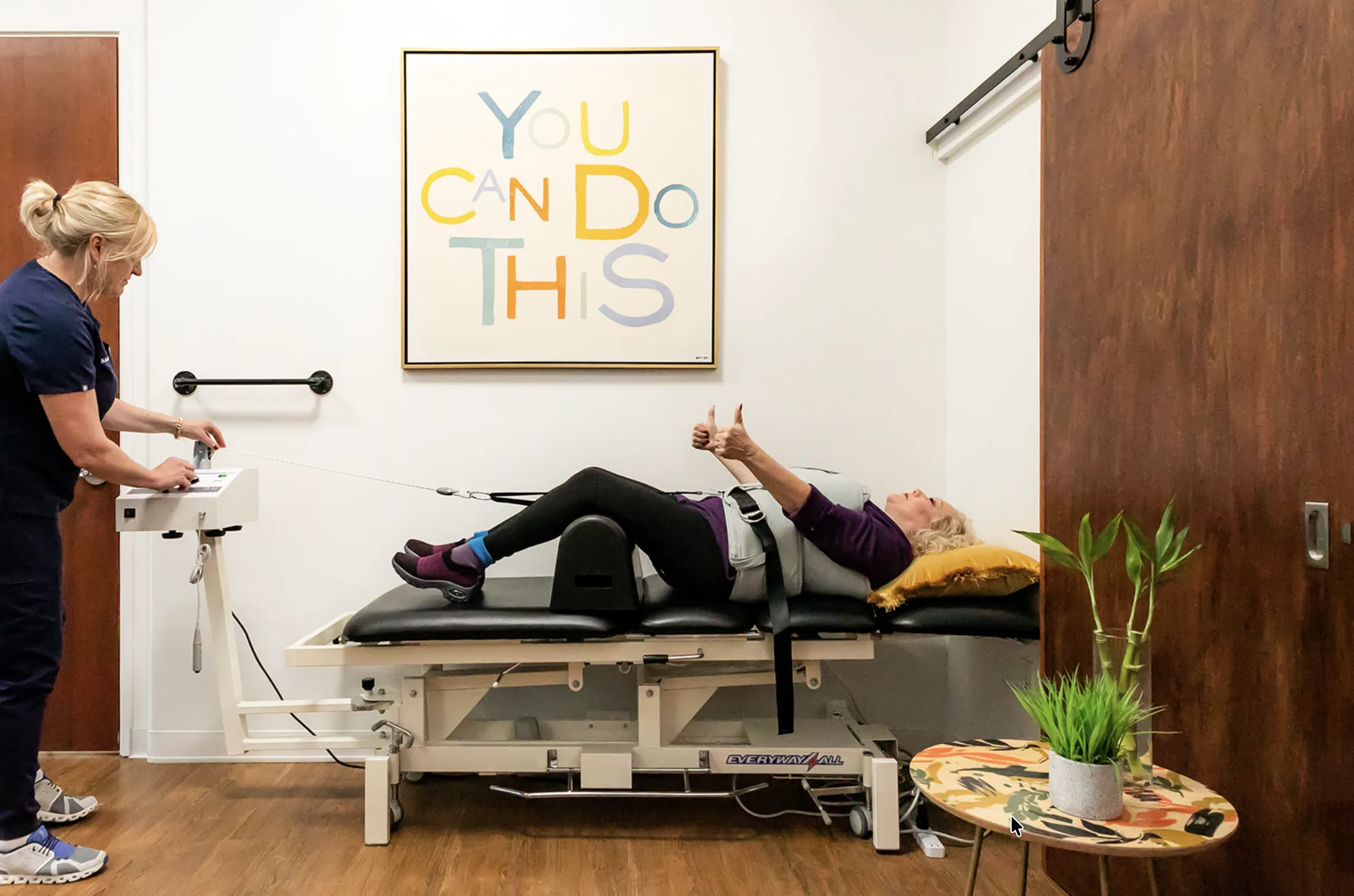
Non-surgical lumbar decompression gently stretches the spine to reduce pressure inside the discs and open space around irritated nerve roots, while gentle chiropractic adjustments restore motion to restricted segments.
Calm the tissue
Class IV deep tissue laser and focused shockwave therapy stimulate circulation and cellular repair in inflamed joints and strained muscle, while myofascial cupping and the Graston Technique release the guarded layers that keep the spine compressed.
Rebuild the support
A daily stretching and strengthening program retrains the deep stabilizers so your spine can share load properly on its own, the phase that determines whether relief lasts.
Honest about limits
If your problem needs more than conservative care, we’ll tell you.
Some problems need a different plan, and a few need a specialist or a surgeon. If your exam shows that, we say so on day one and refer you on, before you invest in care that won’t help.
If conservative care isn’t the right fit, we tell you and refer you to the appropriate specialist.
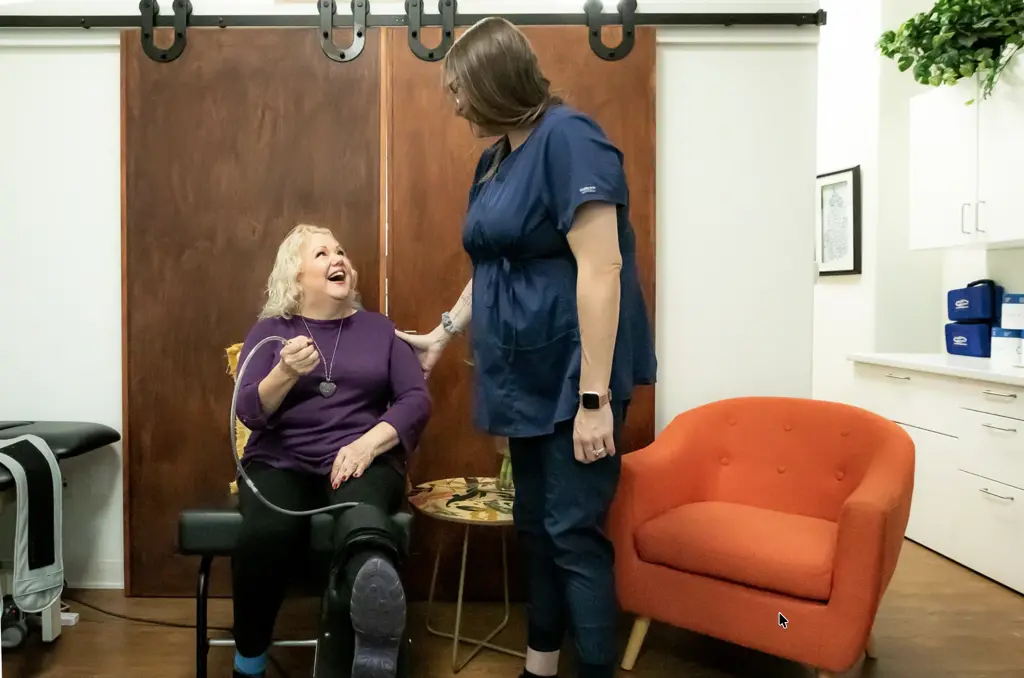
Complete approach. Complete care.
Why the pieces matter together
Each therapy addresses a different link in the cycle. Skipping one tends to leave the loop intact.
01
Decompression feeds the disc
Reducing pressure lets the disc draw in fluid and nutrients, the imbibition process it depends on to repair. Many patients feel pressure begin to ease within the first few sessions.
02
Soft tissue work releases the brace
Until guarding muscles let go, adjustments and exercise are fighting a locked system. Freeing those layers makes every other therapy more effective.
03
Habits close the loop
Anti-inflammatory nutrition guidance and simple movement habits, how you sit, lift, and break up the day, keep the load from piling back onto the same structures.
You learn to manage it yourself: every step comes with the habits and movements that close the loop between visits.
Feel better. Live better.
Find out which structures are carrying too much
Dr. Sarah Scharf, DC, starts with a detailed exam of your spine, posture, and movement to identify where the load-sharing has broken down, then builds a phased plan to correct it. Whether you want to get back on the Marin trails or simply get through a workday comfortably, that’s where lasting relief starts.
Patient reviews
Finally explained. In their own words.
Read what patients have shared about their care.
-
I had an ongoing knee issue from an old ACL injury, and the team at Marin Joint Health provided wonderful care and effective treatment. My knee has improved significantly, and I now have much less pain. I'm so grateful for their expertise and highly recommend them to anyone dealing with similar issues.
-
I love the quality of care I’m receiving! And Dr. Scharf and her staff are wonderful! I’m so glad I signed up for this program to treat my knees, osteoarthritis and meniscus tears!
-
My experience has been transformative for me. My knee pain kept me from being active. I feel like I now have freedom to return to my life being active and healthy. The staff and patients make each visit so pleasant, there is a general feeling of positive healthy attitudes and healing shared during my visits. My only regret is not having found them sooner.
-
I had problems with my knees and it was painful to walk. I started treatment with Dr. Patrick and Gabriela, and now I walk much better and the pain is much less.
-
I have been coming to the clinic for three months. From arriving with excruciating pain in both knees I can now say that my knees are stable, mostly pain free, and I am getting stronger. My goal was to avoid surgery and stay active. Dr Scharf and her team Dr Chu and Gabriella are amazing. They are so dedicated to helping me feel better. I…
Individual results vary.
FAQ
Frequently Asked Questions
Still have questions? Call us and we’ll explain exactly how we can help.
It is for patients with back pain from discs, joints, muscles, or nerves who want a non-surgical path.
Care is non-invasive and comfortable, often combining decompression with movement work.
Your timeline depends on the cause and severity, which the exam helps clarify.
Because the spine anchors the body, easing back pain can also help the hips and knees.
There is no downtime. Many patients feel pressure ease early, with steady gains over time.
Feel better. Live better.
Finally understand why you hurt—and what you can do about it.
We explain what we find, build a complete conservative plan and teach you how to stay ahead of it for life.