
Home Services Knee-On-Trac Decompression
Knee-On-Trac Decompression Therapy
Cartilage rehydrates. You heal.
Knee pain often comes from a joint that is compressed and irritated. Knee-On-Trac gently makes space in the joint so it can move and heal, and on day one we show you exactly why your knee needs that space.
Conservative care for knee and joint pain.
At a glance
Day one
We show you why your knee is compressed, and what we’ll fix.
No downtime
Gentle, drug-free sessions you can relax through.
One system
Paired with tissue healing and your home program.
At a glance
Knee-On-Trac decompression, explained
01
What it is
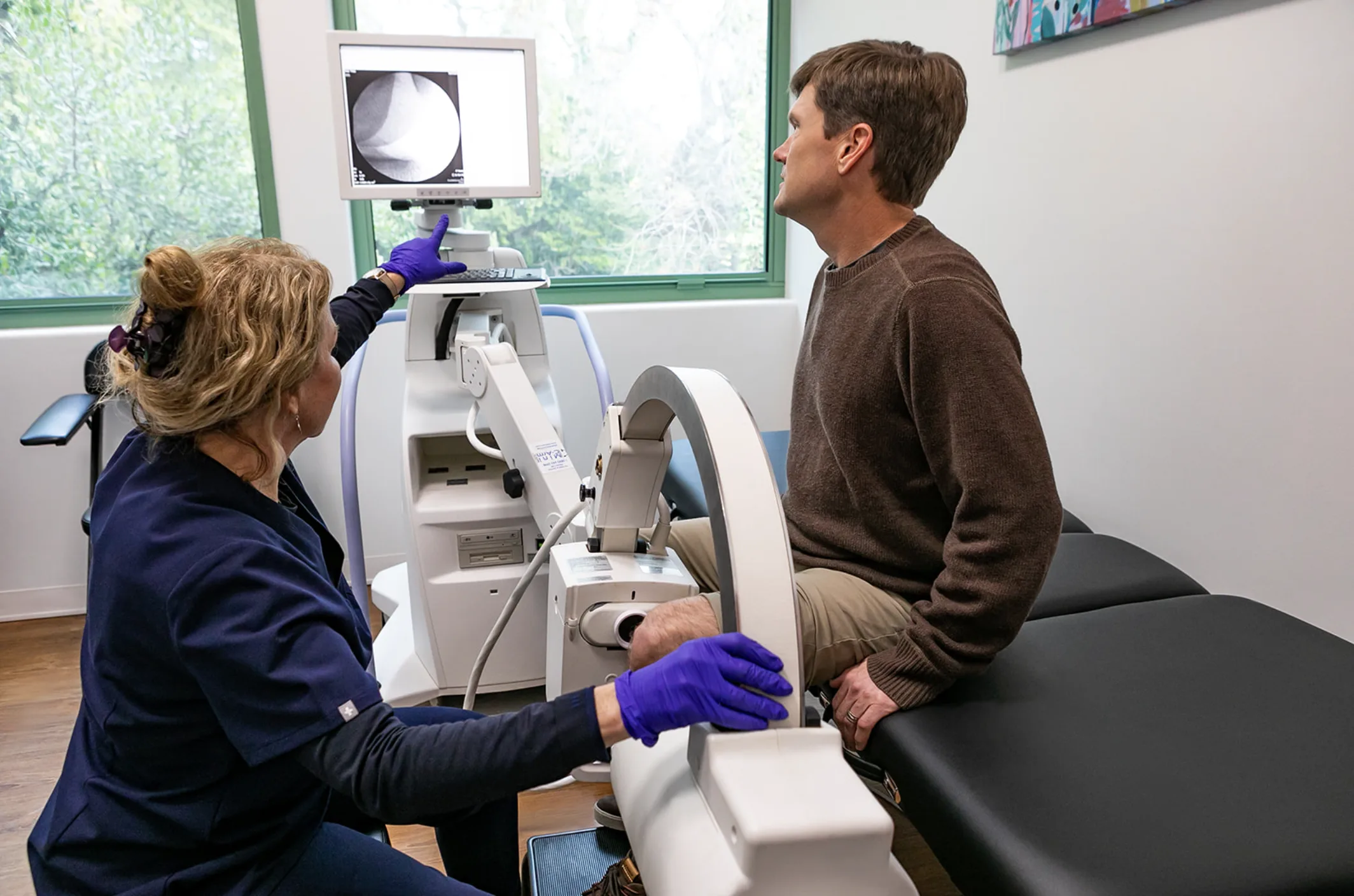
Knee-On-Trac is a targeted decompression therapy for the knee. Using gentle, controlled traction, it eases pressure inside the joint and opens up room for healthier movement. It is comfortable, non-invasive and a regular part of how our doctors care for stiff, achy and overloaded knees.
02
How it works
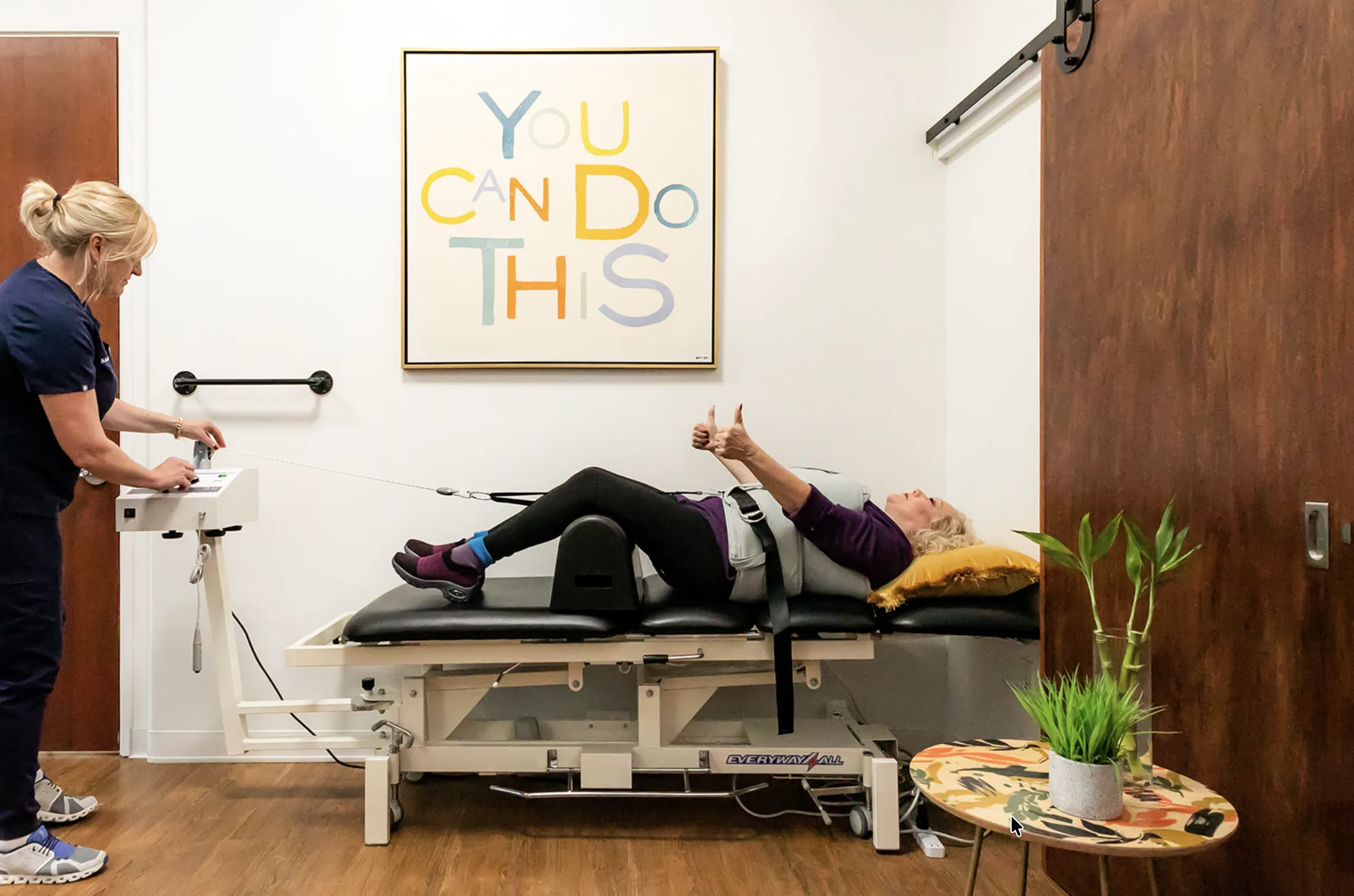
You relax while the device applies a steady, gentle pull to the knee. That traction decompresses the joint, encourages fresh blood flow and helps nourish the cartilage and soft tissue inside. Sessions are short and painless, and they sit alongside the other therapies in your plan.
03
How it helps
When a joint is compressed all day, it has little chance to recover. Taking the pressure off irritated tissue supports healing, so the knee feels looser and moves more freely. Inside a complete plan, it sets the stage for progress that lasts.
Understand why you hurt
A Joint That Never Gets to Rest
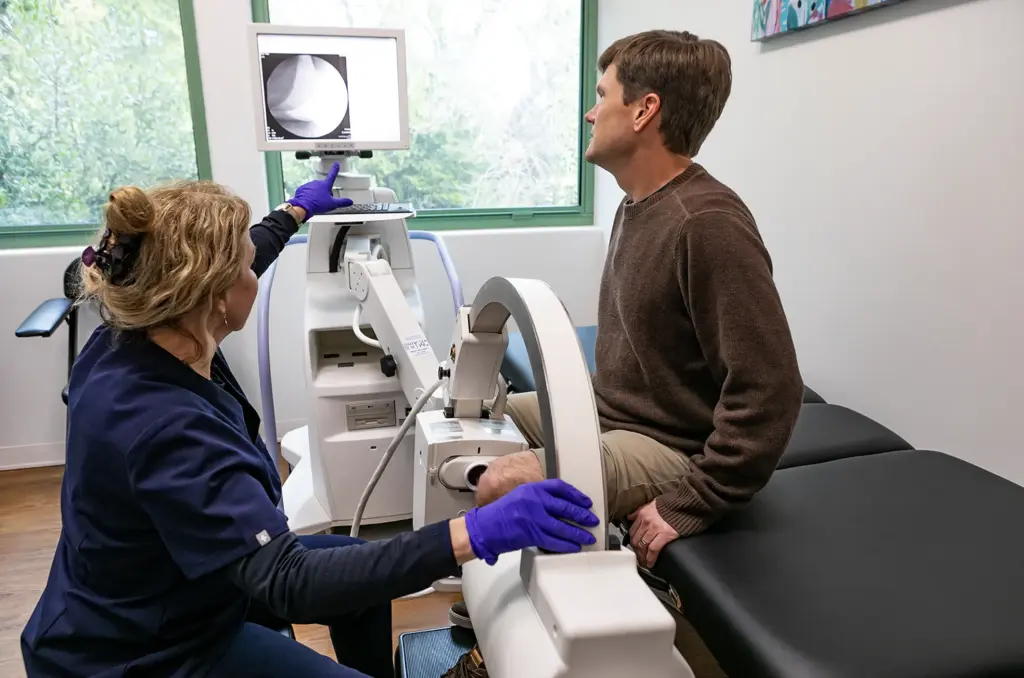
Your knee spends nearly every waking hour under compression. Standing, walking a Marin trail, climbing stairs, even sitting with the joint bent: the surfaces inside are pressed together almost constantly. For a healthy knee that is fine. For one that is stiff, arthritic or irritated, that constant pressure becomes part of the problem.
Here is the detail that makes it matter: the cartilage lining your knee has no blood supply. It is fed entirely by synovial fluid, the joint’s built-in lubricant and delivery system. That fluid only circulates when the pressure inside the joint changes, a squeeze-and-release cycle that pushes nutrients in and waste out. A knee held under steady compression barely gets to run that cycle, so the cartilage is left both squeezed and under-fed.
Knee-On-Trac exists to give the joint what daily life rarely does: a moment of real decompression. It gently pulls the joint surfaces apart so the knee can breathe, feed and recover.
Day one: we explain
Before any treatment, we show you what compression is doing to your cartilage, and exactly what we’re going to change.
How it works
What Gentle Traction Actually Does Inside the Knee
The device applies a steady, controlled pull to the lower leg. Simple on the outside, but it changes the mechanics inside the joint in three useful ways.
01
It opens the joint space
The traction eases the two joint surfaces apart, creating room where they had been pressed together. That space alone takes load off irritated cartilage and the tissues around it.
02
It restarts fluid circulation
The pull-and-release of a session drives the pressure changes that move synovial fluid through the joint, delivering the nutrition cartilage cannot get any other way.
03
It relieves pressure on sore surfaces
By unloading the joint, even briefly, traction lets irritated surfaces settle down. That is often why the knee feels looser and moves more freely after a session.
Who it’s for
Who It’s For
Knee-On-Trac is aimed squarely at knees whose trouble is tied to compression and stiffness.
Stiff, achy, overloaded knees
Joints that feel tight and compressed by the end of an active day often respond well to regular decompression.
Osteoarthritic and worn joints
When cartilage is thinning, keeping the remaining tissue nourished and unloaded matters. Traction supports both, gently and without medication.
Active adults staying in the game
For people who want to keep hiking, golfing, traveling and keeping up with the grandkids, decompression helps the knee recover between the activities that load it.
Honest about limits
If your knee needs more than decompression, we’ll tell you.
Some knees need a different plan, and a few need a surgeon. If your exam shows that, we say so on day one and refer you on, before you invest in care that won’t help.
Local surgeons and physicians refer patients who want to try conservative care first.
Complete approach. Complete care.
How It Fits the Knee Protocol
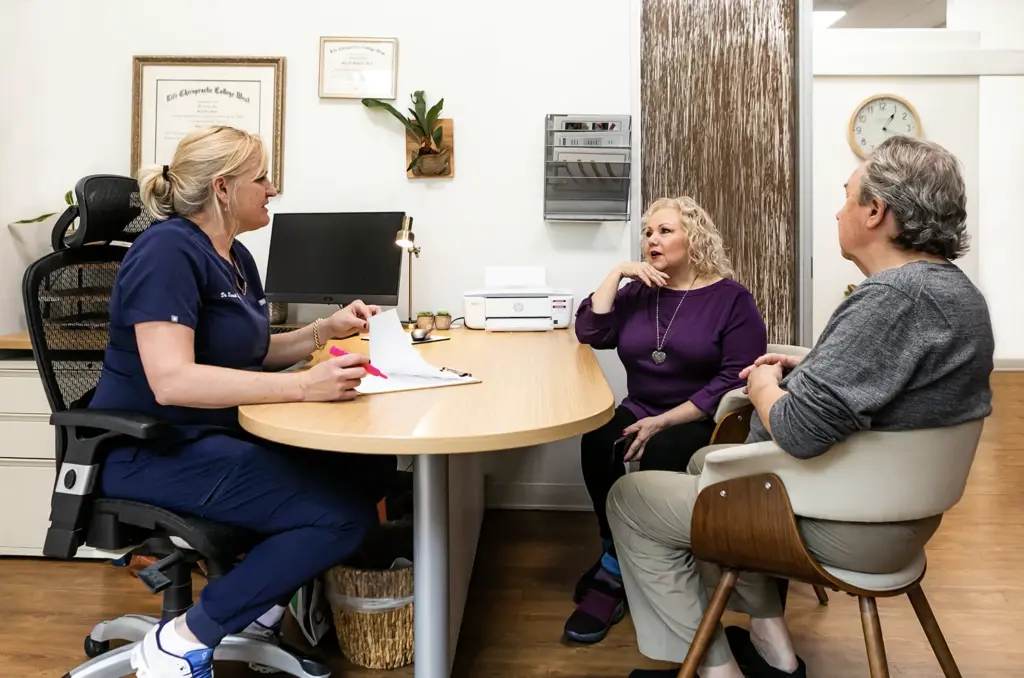
Decompression sets the stage. The therapies paired with it do the deeper repair work while the joint is unloaded.
01
Paired with tissue healing
An unloaded joint is the ideal moment for Class IV laser or focused shockwave: the tissue is no longer being compressed while it tries to heal.
02
It prepares the joint for movement work
A looser, better-lubricated knee tolerates strengthening and range-of-motion exercises far better, so your home program works harder for you.
03
One piece of a coordinated plan
The lasting gains build across a series of sessions when decompression is combined with the rest of the 12-Week Knee Pain Protocol.
You learn to manage it yourself: every step comes with the home movements that keep your knee fed between visits, and long after your plan ends.
Feel better. Live better.
Take the Pressure Off Your Knee
If your knee feels tight, compressed and slow to recover after a full day, decompression may be what it has been missing. On day one we’ll show you whether it belongs in your knee program.
Patient reviews
Finally explained. In their own words.
Read what patients have shared about their care.
-
I had an ongoing knee issue from an old ACL injury, and the team at Marin Joint Health provided wonderful care and effective treatment. My knee has improved significantly, and I now have much less pain. I'm so grateful for their expertise and highly recommend them to anyone dealing with similar issues.
-
I love the quality of care I’m receiving! And Dr. Scharf and her staff are wonderful! I’m so glad I signed up for this program to treat my knees, osteoarthritis and meniscus tears!
-
My experience has been transformative for me. My knee pain kept me from being active. I feel like I now have freedom to return to my life being active and healthy. The staff and patients make each visit so pleasant, there is a general feeling of positive healthy attitudes and healing shared during my visits. My only regret is not having found them sooner.
-
I had problems with my knees and it was painful to walk. I started treatment with Dr. Patrick and Gabriela, and now I walk much better and the pain is much less.
-
I have been coming to the clinic for three months. From arriving with excruciating pain in both knees I can now say that my knees are stable, mostly pain free, and I am getting stronger. My goal was to avoid surgery and stay active. Dr Scharf and her team Dr Chu and Gabriella are amazing. They are so dedicated to helping me feel better. I…
Individual results vary.
FAQ
Frequently Asked Questions
Still have questions? Call us and we’ll explain exactly how we can help.
It is a good fit for people with knee stiffness, osteoarthritis or general joint compression, especially as part of a broader knee program. Your day-one exam tells us, and you, whether decompression belongs in your plan.
Most people find it relaxing. You sit or lie back while the device does the work, and there is no pain involved. We explain what the traction is doing inside your knee as it happens.
Each session is brief. How many you need depends on your knee and your overall plan, which our doctors map out and explain after your exam, so you know the plan and the reason for it from day one.
It works best as one piece of a coordinated protocol rather than a stand-alone fix. Pairing it with movement work and your home program is what makes the results hold.
There is no downtime. The knee often feels looser as sessions progress, and the bigger gains build over a series of visits. We show you what is changing along the way.
No. The goal is a knee you understand and can look after yourself with your home program. Some patients choose occasional tune-up visits later on, but they are optional, never a requirement.

Feel better. Live better.
Finally understand why you hurt—and what you can do about it.
We explain what we find, build a complete conservative plan and teach you how to stay ahead of it for life.