
Home Services Knee Osteoarthritis
Knee Osteoarthritis
Real care between painkillers and surgery.
An arthritis diagnosis does not have to mean painkillers or a joint replacement on the calendar. There is real, restorative care in between.
Conservative care for knee and joint pain.
At a glance
Day one
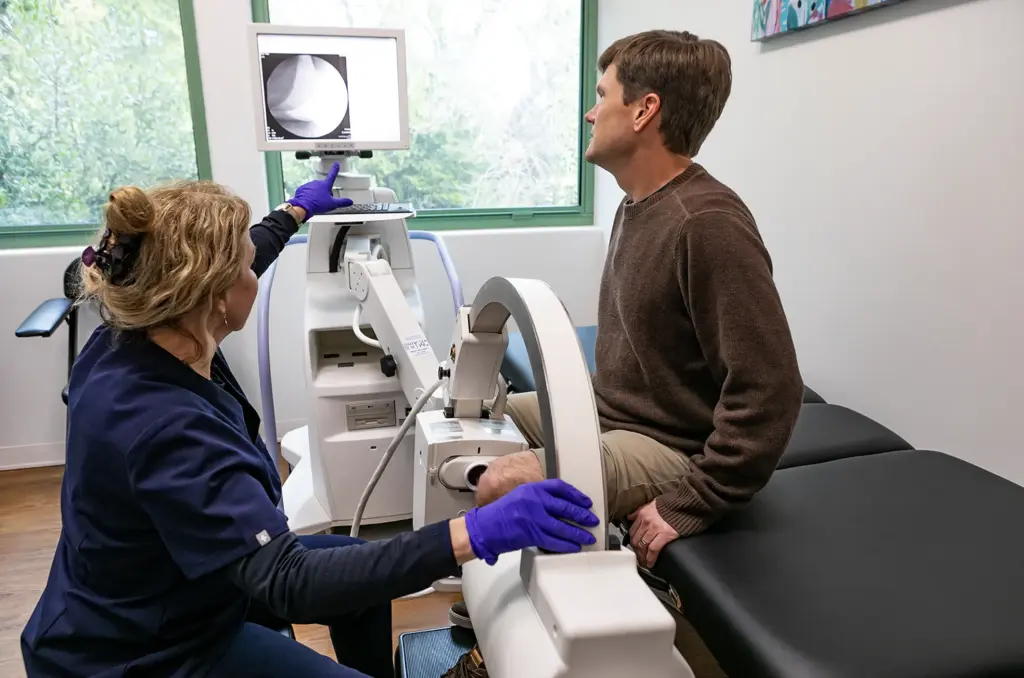
We show you how your joint is loading and moving.
Active-first
A realistic plan built around keeping you moving.
No downtime
Non-surgical, drug-free care.
At a glance
Knee osteoarthritis, explained
01
What it is
Osteoarthritis is the gradual wear of the cartilage that cushions a joint, most often the knee or hip. It brings stiffness, swelling, and pain that tends to worsen over time. Our care focuses on protecting function and easing symptoms without surgery.
02
How it works
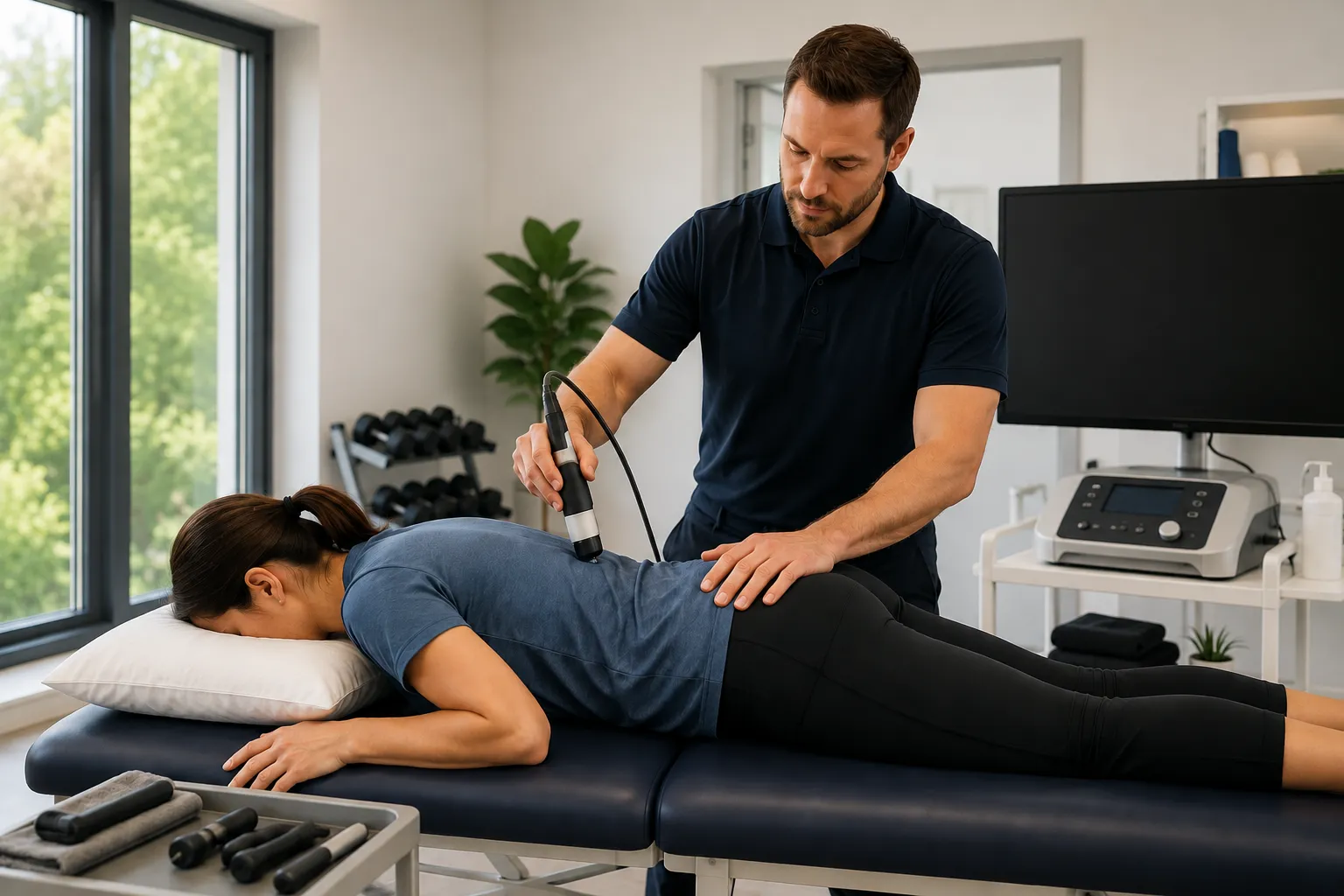
After assessing the joint and how you move, your plan pairs therapies that reduce inflammation and support tissue, like laser, shockwave, and decompression, with movement work that takes load off the worn area. Progress is tracked along the way.
03
How it helps
You cannot reverse arthritis, but you can change how it feels and how well the joint works. Reducing pain and improving mechanics helps many patients stay active and delay or avoid more invasive steps. Dr. Sarah Scharf, DC, is honest about what care can and cannot do.
Understand why you hurt
Arthritis is not a countdown to a joint replacement
Osteoarthritis is often described as simple wear and tear, as if a joint were a tire slowly going bald. The truth is more hopeful and more interesting. Cartilage is living tissue, and it responds, for better or worse, to how a joint is loaded, moved, and supported.
When a joint carries load unevenly, because of muscle imbalance, lost alignment, or reduced motion, one area of cartilage takes more than its share. That concentrated stress drives inflammation and gradual thinning. The joint space narrows, movement stiffens, and the reduced motion further slows the fluid exchange that keeps cartilage nourished.
We cannot regrow cartilage or cure arthritis, and any honest clinic will tell you the same. What often can change is how the joint is loaded and how it feels, and that alone helps many patients stay active and put off more invasive steps. The aim is to work with the joint you have, not against it.
Day one: we explain
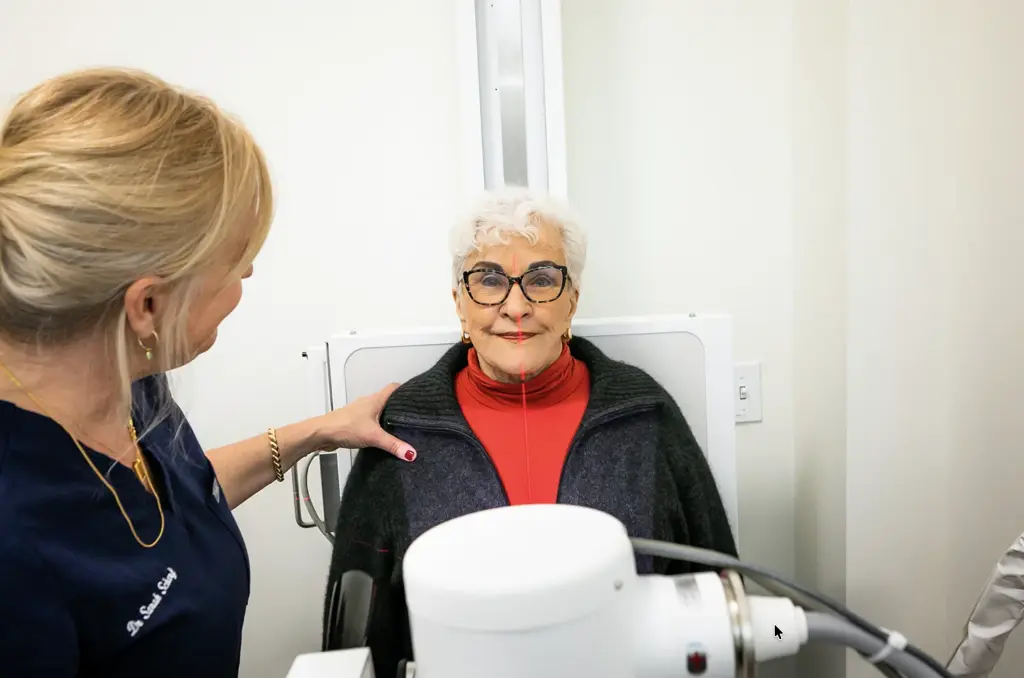
Before any treatment, we show you how your joint is being loaded, and exactly what we’re going to change.
What’s going on
What actually drives an arthritic joint downhill
Thinning cartilage is usually the result of a mechanical problem, not just age.
01
Uneven loading
When muscles are imbalanced or alignment drifts, pressure concentrates on one part of the joint surface, accelerating irritation and wear in that spot.
02
A narrowing, drying joint
As the joint space tightens, there is less room and less fluid movement, so cartilage receives less of the nourishment it needs to stay resilient.
03
The stiffness loop
Pain leads to less movement, less movement means poorer fluid exchange and weaker supporting muscles, and that makes the joint stiffer still.
How we help
How we change the joint’s environment
We cannot rebuild cartilage, but we can improve the conditions it lives in.
Unload and open the joint
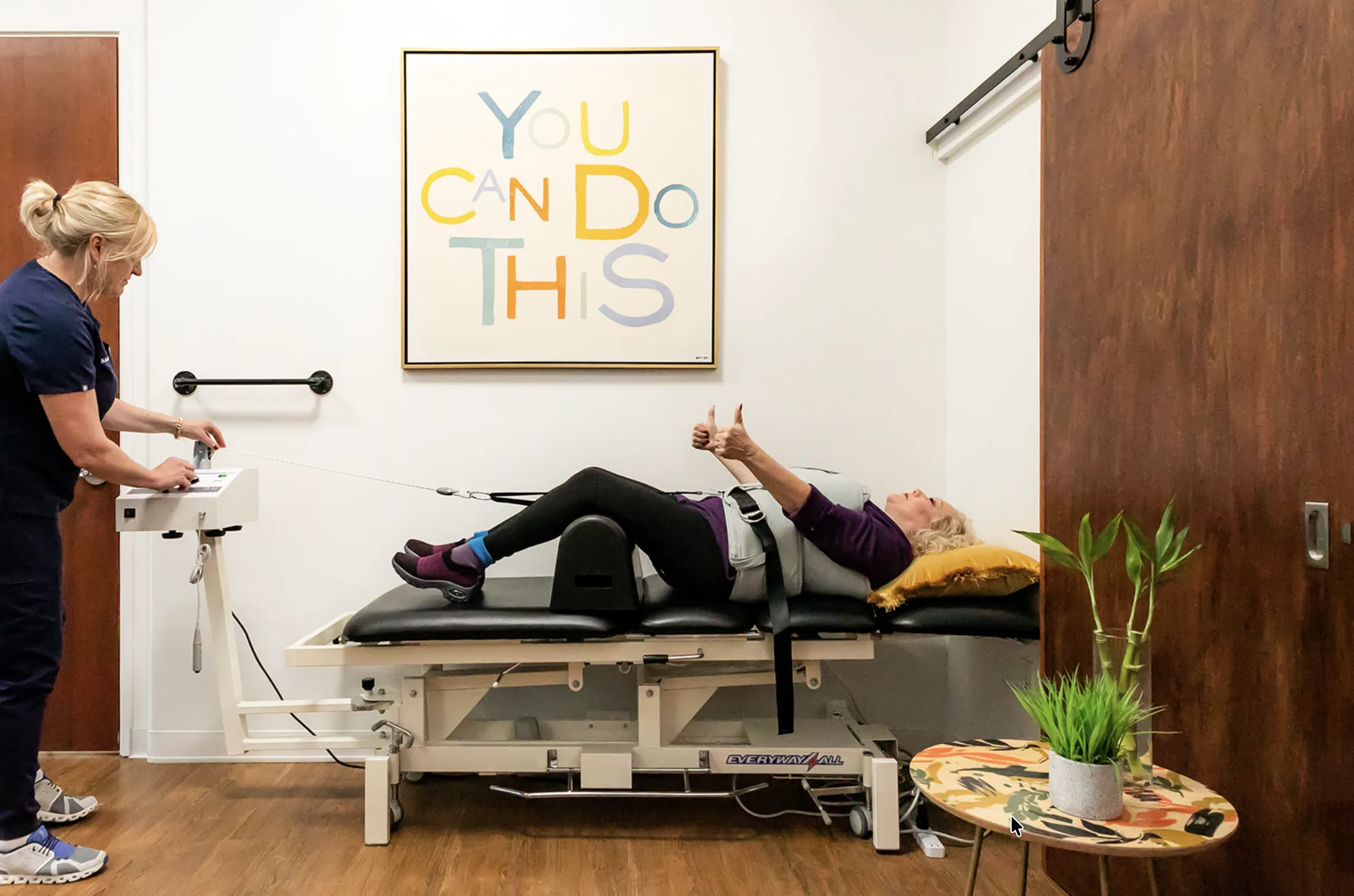
Non-surgical decompression gently restores joint space and encourages fluid exchange, while rebalancing the surrounding muscles helps spread load more evenly.
Calm the inflammation
Class IV deep tissue laser helps reduce the inflammation that drives pain and further irritation within the joint.
Rebuild support around it
A targeted strengthening program, custom orthotics where useful, and anti-inflammatory nutrition guidance give the joint steadier, better-distributed support.
Honest about limits
If your problem needs more than conservative care, we’ll tell you.
Some problems need a different plan, and a few need a specialist or a surgeon. If your exam shows that, we say so on day one and refer you on, before you invest in care that won’t help.
If conservative care isn’t the right fit, we tell you and refer you to the appropriate specialist.
Complete approach. Complete care.
A realistic, active-first plan
Honest expectations are part of good arthritis care.
01
Manage, not cure
The goal is a joint that feels and functions better, not a promise to reverse the diagnosis.
02
An active phase, then maintenance
Care often starts with focused visits, then shifts to lighter upkeep once your symptoms and mechanics improve.
03
Staying in the game
For many patients, comfortable movement means staying on the trails, the course, or the pickleball court that matter to them.
You learn to manage it yourself: every step comes with the home movements that keep your joint moving for the long run.
Feel better. Live better.
There is real care between painkillers and surgery
An arthritis diagnosis does not have to dictate your next decade. Let’s assess how your joint is loading and moving and build a plan around keeping you active.
Patient reviews
Finally explained. In their own words.
Read what patients have shared about their care.
-
I had an ongoing knee issue from an old ACL injury, and the team at Marin Joint Health provided wonderful care and effective treatment. My knee has improved significantly, and I now have much less pain. I'm so grateful for their expertise and highly recommend them to anyone dealing with similar issues.
-
I love the quality of care I’m receiving! And Dr. Scharf and her staff are wonderful! I’m so glad I signed up for this program to treat my knees, osteoarthritis and meniscus tears!
-
My experience has been transformative for me. My knee pain kept me from being active. I feel like I now have freedom to return to my life being active and healthy. The staff and patients make each visit so pleasant, there is a general feeling of positive healthy attitudes and healing shared during my visits. My only regret is not having found them sooner.
-
I had problems with my knees and it was painful to walk. I started treatment with Dr. Patrick and Gabriela, and now I walk much better and the pain is much less.
-
I have been coming to the clinic for three months. From arriving with excruciating pain in both knees I can now say that my knees are stable, mostly pain free, and I am getting stronger. My goal was to avoid surgery and stay active. Dr Scharf and her team Dr Chu and Gabriella are amazing. They are so dedicated to helping me feel better. I…
Individual results vary.
FAQ
Frequently Asked Questions
Still have questions? Call us and we’ll explain exactly how we can help.
It is for patients with osteoarthritis, often in the knee or hip, who want to manage it without surgery or constant medication.
Care is gentle and non-invasive, focused on easing pain and improving how the joint moves.
Arthritis is ongoing, so care often blends an active phase with lighter maintenance, mapped out after your exam.
Care manages arthritis rather than curing it, and we are clear about realistic goals from the start.
There is no downtime. Many patients move more comfortably and rely less on pain relief over time.

Feel better. Live better.
Finally understand why you hurt—and what you can do about it.
We explain what we find, build a complete conservative plan and teach you how to stay ahead of it for life.