
Home Services
Knee-First Chiropractic Care for Joint Pain in Novato
Complete approach. Complete care.
From advanced therapies to at-home support, every service fits one goal: help you understand your body, move with confidence and stay active on your own.
Conservative care for knee and joint pain.
At a glance
Day one
We explain why you hurt before we treat it.
5 therapies + 2 programs
Combined into one plan built for you.
Conservative first
Chiropractic care and non-invasive therapies.
How we work
Finally understand why you hurt—and how to fix it.
Every service below is one part of the same philosophy. It’s what makes care here different from getting a treatment and a bill.
01
We explain. Day one.
Your joint structure, your movement pattern, why you hurt and exactly what we’re fixing. You leave informed, not mystified.
02
Complete approach. Complete care.
Decompression, chiropractic care, custom exercises and tissue support work together as one coordinated system.
03
You learn to manage it yourself.
Home care and exercises you understand help you maintain progress without depending on ongoing visits.
Our services
Every service, one plan
You rarely get just one of these. Your day-one exam decides which ones work together for your body, and we explain why.
Therapies
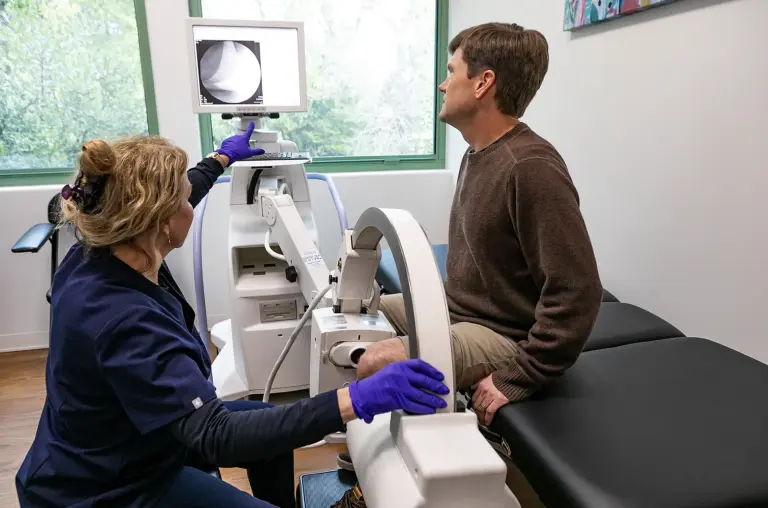
Knee-On-Trac Decompression Therapy
Gently decompresses the knee joint to help ease pressure and improve comfort.
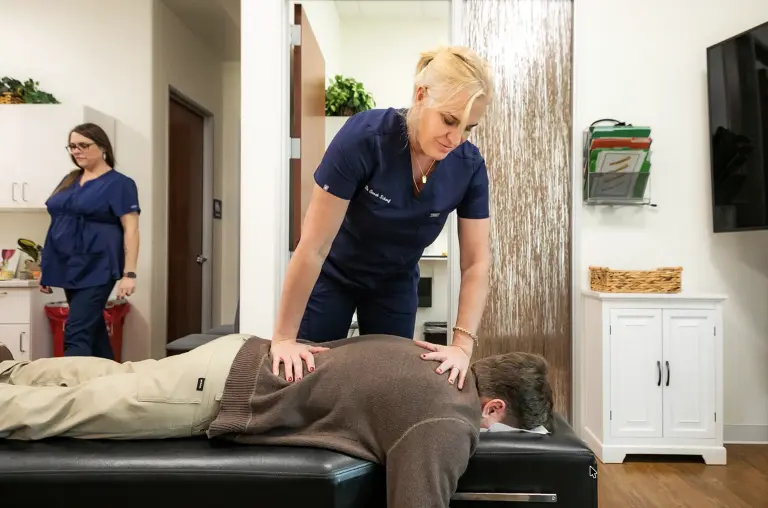
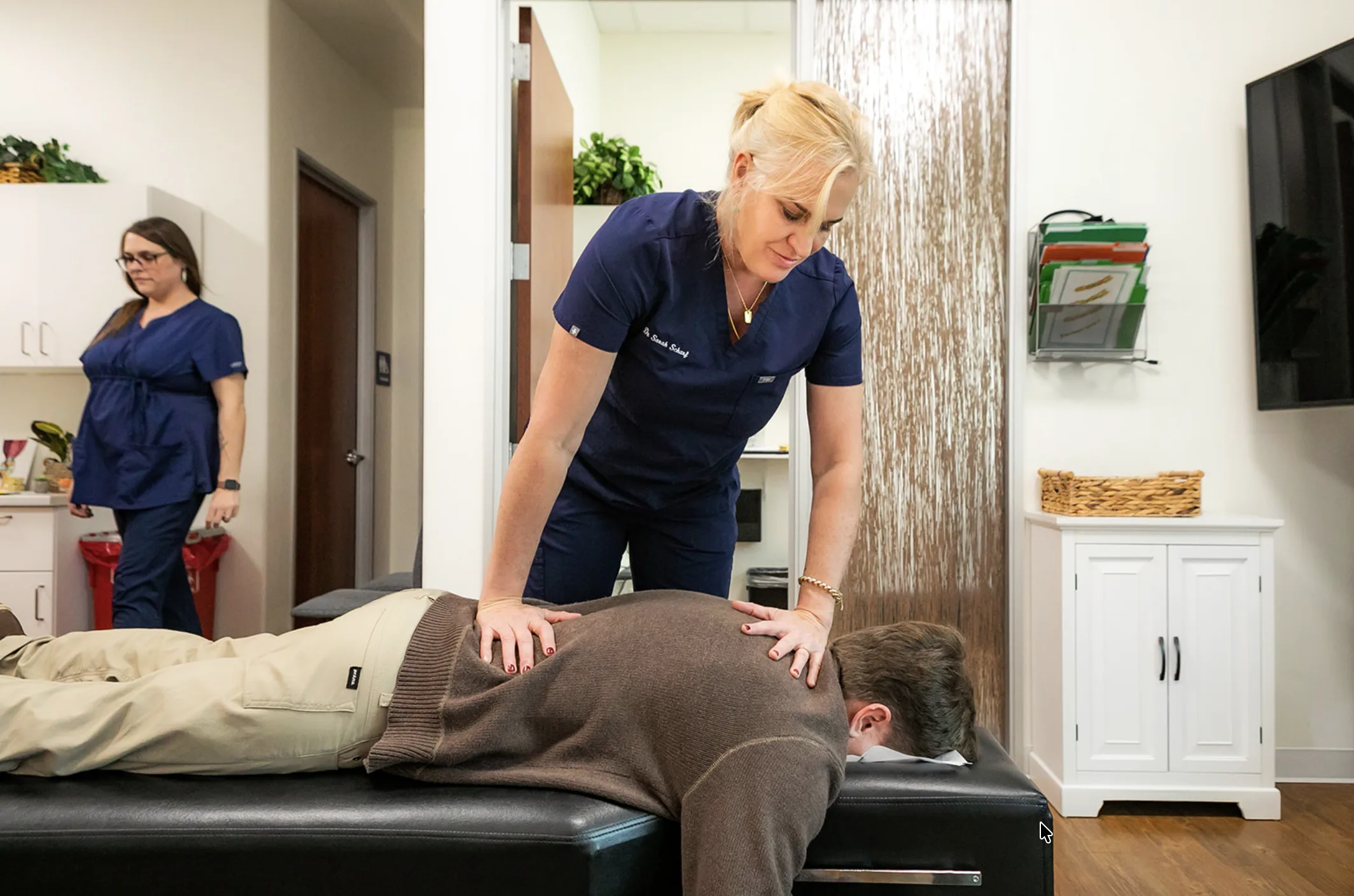
Chiropractic Care for the Kinetic Chain
A whole-chain exam that traces knee, hip and back pain from foot to spine, then treats the real source.
Joint Mobility and Restorative Care
Rebuilds lost range in stiff hips, shoulders, spine and knees, and teaches you how to keep it.
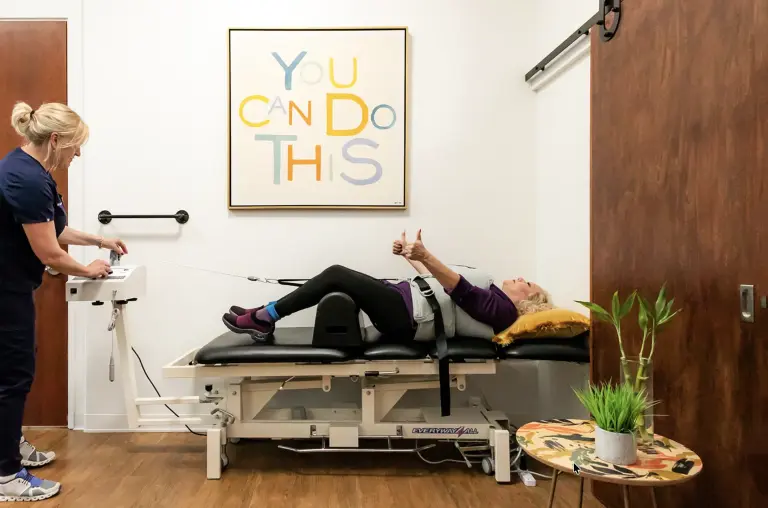
Spinal Decompression Therapy
Relieves disc and nerve pressure so your hips and knees stop paying for your back.
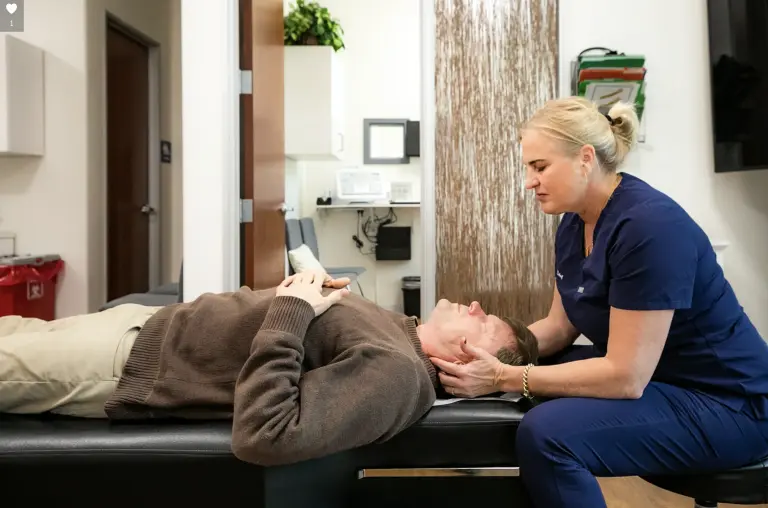
Non-Invasive Chiropractic Care
Gentle, low-force adjusting. Low-force adjusting with instrument-assisted and drop-table techniques.
Knee pain programs
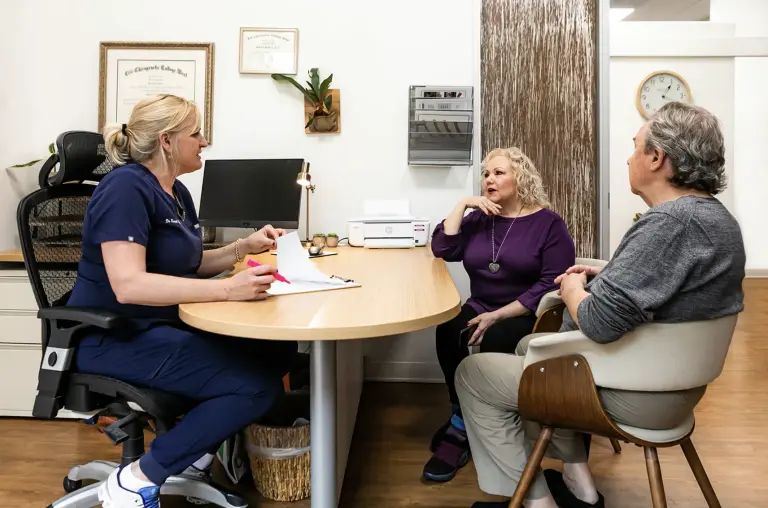
Knee Pain Programs
Structured, start-to-finish programs that treat the root cause of knee pain, so relief holds.

12-Week Knee Pain Protocol
Nine therapies, four phases, one plan. Complete approach. Complete care.
6-Month Maintenance Program
Optional tune-ups to protect your results. Your choice, never a requirement.
More ways we help
Whole-body care, built around your life
Knee pain rarely starts at the knee, so our care doesn’t stop there. The goal is getting you back to trails, travel, golf, family and the everyday movement that keeps you independent.
Specialty services
Tools we build into your plan
Many of these are part of the 12-Week Knee Pain Protocol. On day one we tell you which ones fit you, and why.
- Class 4 laser therapy
- Focused shockwave therapy
- Trigenics® neuro-kinetic therapy
- Custom Foot Levelers orthotics
- Anti-inflammatory nutrition
- Home LED light therapy
- At-home knee rehab
- Daily stretching and strengthening
- Cupping therapy
- Graston Technique
- Neuropathy pain relief
- NerveSpa Knee Pro
Why it’s different
Understanding changes what comes next
We compete on clear explanations, coordinated care and the tools to maintain your progress yourself.
| Instead of | What you usually get | What you get at Marin Joint Health |
|---|---|---|
| A single treatment | One painful area addressed in isolation | We look at the whole chain and coordinate the parts of care that fit you. |
| Exercises without context | Movements to follow without a clear explanation | We show you why each movement matters and how to maintain it at home. |
| Surgery before conservative options | An invasive path considered before every realistic alternative | Conservative first. And if surgery is the right call, we tell you. |
| Short-term symptom relief | Pain may quiet without changing what keeps overloading the joint | We work on movement, strength and tissue support instead of only masking symptoms. |
Honest about limits
If conservative care isn’t the right fit, we tell you and refer you to the appropriate specialist. That honesty is why surgeons and MDs refer their pre-surgical patients to us.
Patient reviews
Finally explained. In their own words.
Read what patients have shared about their care.
-
I was very skeptical, at first, about Marin Joint Health due to my unsuccessful search for treatment for my prolonged severe amount of pain. Having just completed two months of treatment, I am a true believer! Dr. Scharf for her comprehensive diagnosis and Dr. Jay for his incredible hands-on physical therapy, as well as Gabby for being an excellent technician, have made my treatments successful…
-
I had an ongoing knee issue from an old ACL injury, and the team at Marin Joint Health provided wonderful care and effective treatment. My knee has improved significantly, and I now have much less pain. I'm so grateful for their expertise and highly recommend them to anyone dealing with similar issues.
-
I highly recommend Marin Joint Health. I have had some really great results working with Dr. Scharf and her incredible team. In my experience, all the staff are confident, knowledgeable, easy to deal with, and very cheerful. Thank you.
-
Having my knee treated at Marin Joint Health is one of the best decisions I've ever made. My knee pain is gone and I'm walking again easily and enjoying it. Thank you Dr. Sara Scharf, you are amazing.
-
Marin Joint Health has helped me find relief from the discomfort of neuropathy. Dr Sharf and her excellent staff care about their patients well being. Treatment plan includes full body adjustment to ensure sustained spinal health.
-
I love the quality of care I’m receiving! And Dr. Scharf and her staff are wonderful! I’m so glad I signed up for this program to treat my knees, osteoarthritis and meniscus tears!
-
This medical team is 100% dedicated to healing patients. Their approach is holistic and delivered with utmost care and “sweet” loving words. I hope to dance flamenco soon in their honor!
-
Love the fact that everyone here are with a positive attitude and always smiling. The attention that they give you its amazing. I definitely recommend everyone .
-
Awesome place to come in and receive chiropractic care. My first neck adjustment made me feel so much better. Dr Scarf DC is a pro!!!
-
I have found the staff knowledgeable, caring, and more than willing to explain and answer questions. I am excited to be treated with researched alternative therapies instead of surgery.
-
Dr. Scharf is the best! Every experience is unique and amazing. She is always in tune with me, and I feel blessed to be under her care.
-
My rate for them is 5 stars also. I recommended so much because in the first 3 visits I have no pain in my knees, The staff is very helpful and very professional.
Individual results vary.
FAQ
Frequently Asked Questions
Still have questions? Call us and we’ll explain exactly how we can help.
Non-surgical care for knee and joint pain in Novato, CA: Knee-On-Trac decompression therapy, chiropractic care for the kinetic chain, joint mobility and restorative care, spinal decompression therapy and non-invasive chiropractic care, plus the 12-Week Knee Pain Protocol and the optional 6-Month Maintenance Program.
You don’t have to figure that out alone. On day one we examine your joint and the whole chain connected to it, explain why you hurt and recommend the combination of services that fits. Most patients receive several therapies working as one plan.
Knees are our focus, not our limit. We also care for hips, shoulders, the spine and ankles, using the same restorative, whole-body approach.
Often, but not always. For some patients, a complete conservative plan may help avoid or delay surgery. If we don’t believe we can help you without surgery, we will tell you before you commit to anything.
Care may include chiropractic techniques, in-clinic therapies and a home program, explained clearly as part of your plan.
No. Our goal is for you to understand your body well enough to manage it yourself. Maintenance visits are there if you want them, but they are optional, never a requirement.

Feel better. Live better.
Finally understand why you hurt—and get your life back
We explain what’s wrong, build a complete conservative plan and teach you how to stay ahead of it for life.