Treatment
Plantar Fasciitis
That stabbing heel pain with your first steps in the morning is classic plantar fasciitis. We treat it at the source so each step gets easier.
Plantar fasciitis is irritation of the thick band of tissue along the bottom of your foot. It causes sharp heel pain, especially with your first steps or after rest. Because foot mechanics ripple up the whole chain, we treat it as more than a foot problem.
We assess your foot, your gait, and the chain above it. Care may combine therapies that calm inflammation and heal tissue, like shockwave and laser, with custom orthotics and movement work to correct what overloaded the tissue.
Healing the tissue and fixing the mechanics behind it helps stop the cycle of pain and reinjury. Many patients get back to walking and standing comfortably. Dr. Sarah Scharf, DC, treats the feet as the foundation that affects the knees and hips too.
Why those first morning steps feel like stepping on glass
The plantar fascia is a thick, fibrous band that runs along the sole of your foot, anchoring your heel to the base of your toes. It works like a bowstring, tensioning to support your arch every time you load the foot. It is built to handle remarkable force, but it is built to handle it in balance.
When the fascia is overloaded again and again, by tight calves, too little arch support, or a sudden jump in activity, it develops tiny micro-tears faster than it can repair them. Overnight, while you sleep with your foot relaxed, the fascia shortens and those small tears begin to knit together. Then you stand up in the morning, load that shortened, half-healed tissue all at once, and it tears again.
That stabbing first-step pain is exactly this cycle, repeating each morning. And the fascia rarely acts alone: it is continuous with your Achilles tendon and calf muscles, so a tight calf tugs on the heel and keeps the fascia under steady strain. Treat only the heel and you address just half the problem; the load-and-repair cycle keeps running until the whole calf-and-arch chain is calmed.
The load-and-repair cycle, and why it stalls
Plantar fasciitis is less an injury than a repair process that cannot keep up.
Micro-tearing outpaces healing
Normal walking creates tiny stresses the fascia repairs overnight. When the load is too high or the support too low, damage accumulates faster than repair, and the tissue stays inflamed.
The overnight shortening trap
While you rest, the fascia tightens and starts to mend. Those first weight-bearing steps stretch and re-tear it, which is why mornings and standing after sitting hurt most.
The calf and Achilles connection
A tight calf pulls through the heel and into the fascia. Without addressing it, the arch stays overloaded no matter how much you rest the foot.
How we break the cycle
The plan calms the tissue and removes what kept overloading it.
Stimulate real repair
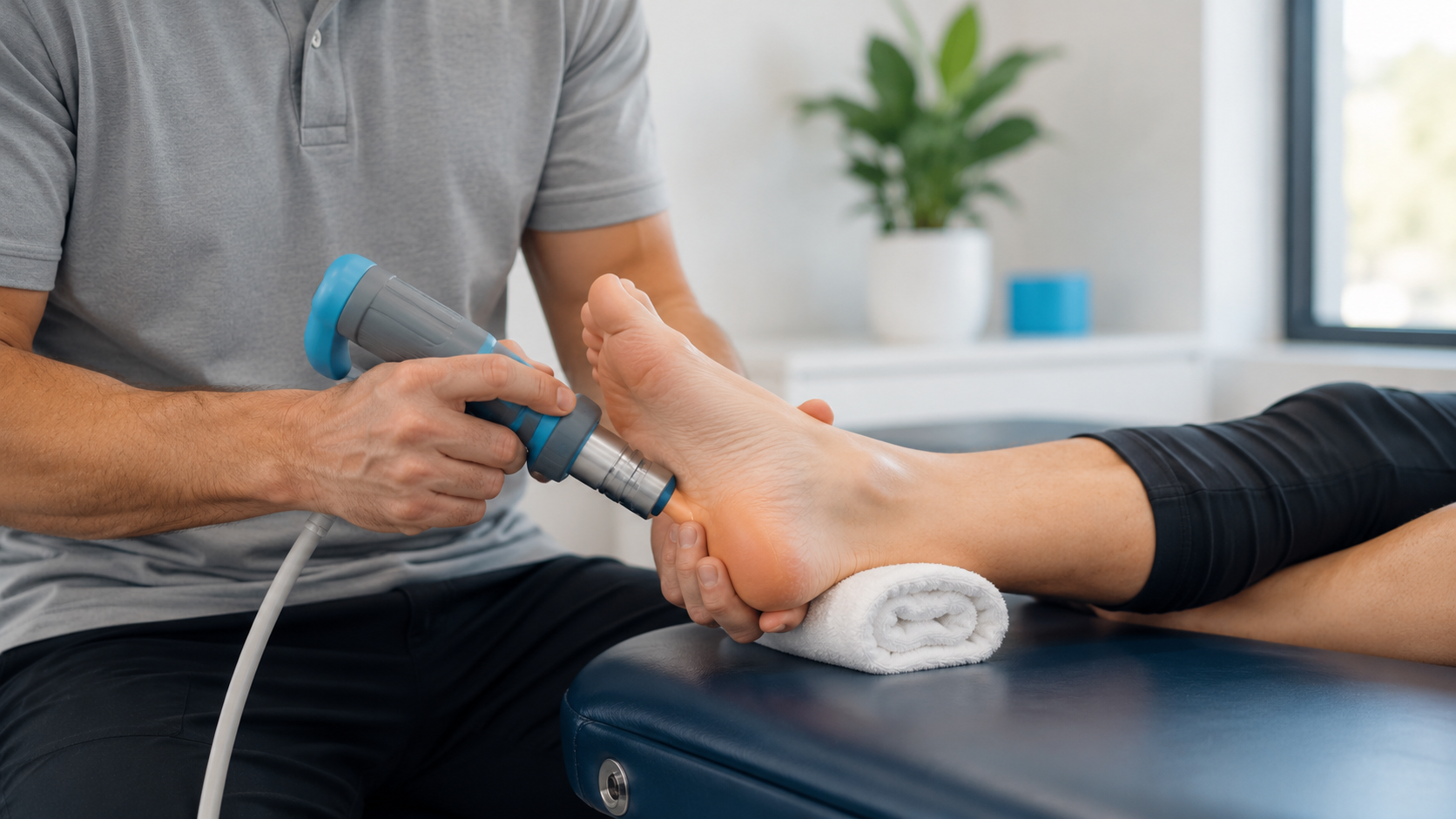
Focused shockwave therapy delivers controlled energy that jump-starts the healing response in stalled, chronically irritated fascia, while Class IV laser helps reduce inflammation.
Release the tension feeding it
Soft tissue work, myofascial cupping, and the Graston Technique free up the calf and fascia so the arch is no longer under constant pull.
Support the arch that overloaded it
Custom Foot Levelers orthotics share the load your fascia was carrying alone, and a daily calf-and-foot stretching routine keeps the tissue supple.
What getting better tends to look like
Stubborn fascia responds to consistency more than intensity.
Non-invasive from start to finish
No surgery, injections, or downtime; care works with the tissue's own repair cycle.
Gradual, then steady
Many patients notice those first morning steps easing as the fascia heals and the mechanics improve.
Back to your stride
The aim is comfortable walking and standing again, whether that means Marin trails or a full day on your feet.

Stop dreading your first steps
If heel pain greets you every morning, the load-and-repair cycle behind it can be interrupted. Let's look at your foot, your calves, and your gait together.
Schedule your plantar fasciitis evaluationFAQFrequently Asked Questions
It is for patients with heel or arch pain from plantar fasciitis who want lasting relief without surgery.
Care is non-invasive, and many patients feel their first steps getting easier as the tissue heals.
Stubborn cases take time, so your plan sets a realistic timeline after the exam.
Orthotics and small gait changes often matter as much as the in-clinic care here.
There is no downtime. Pain usually eases gradually as the tissue and mechanics improve.
 Marin Joint Health
Lasting relief from knee and joint pain without surgery
If knee or joint pain is holding you back, Dr. Sarah Scharf, DC, treats the root cause, not just the symptoms, without surgery or drugs.