Treatment
Graston Technique
Scar tissue and adhesions can quietly hold your recovery back. The Graston Technique breaks them up so tissue can heal and glide the way it should.
The Graston Technique is a form of instrument-assisted soft-tissue therapy. Using specially designed tools, the provider works along muscles and tendons to find and release scar tissue and adhesions. It is a precise, hands-on part of restorative joint care.
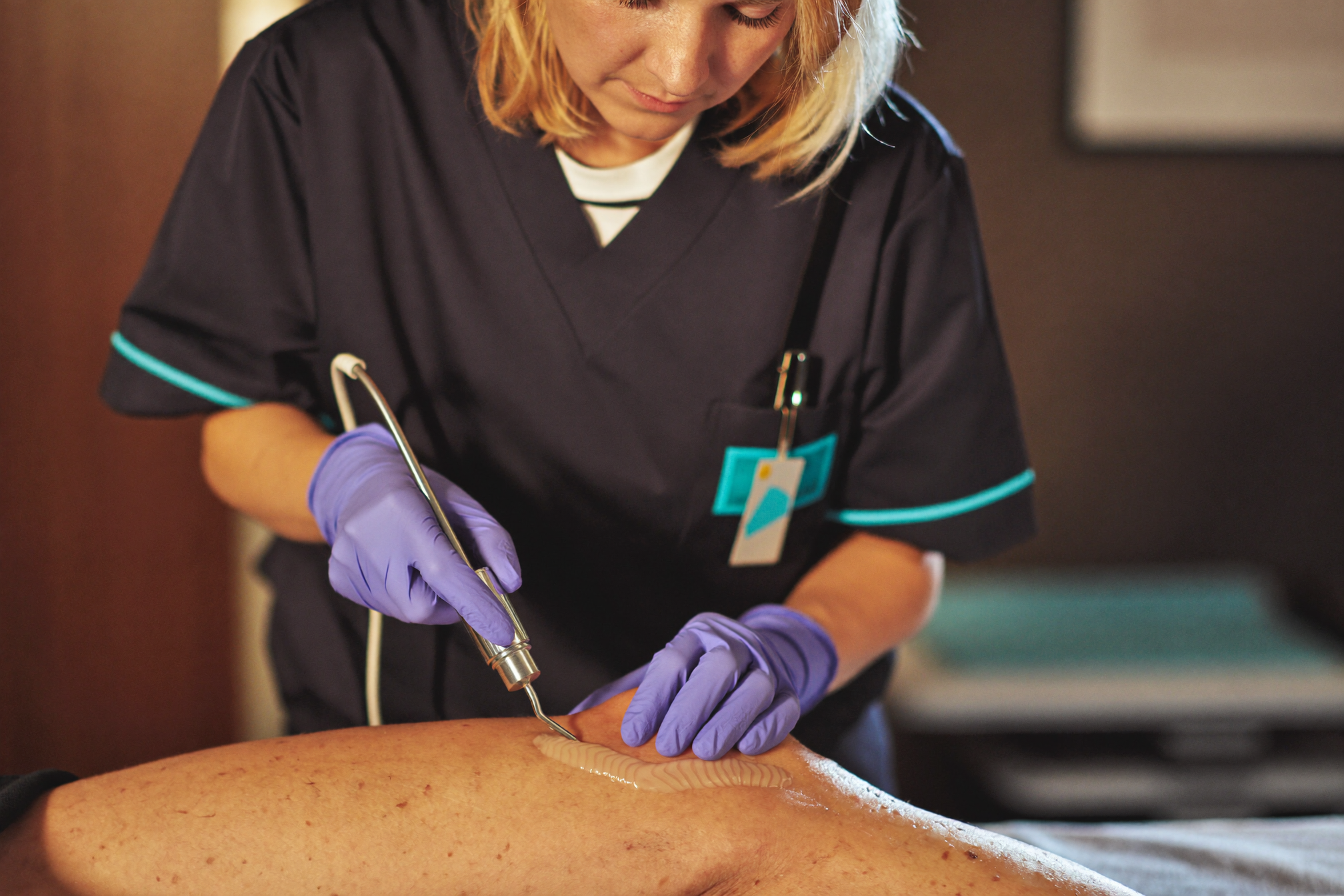
The provider glides smooth, stainless tools over the skin to locate areas of restriction, then works those spots to break down adhesions. This stimulates blood flow and starts a fresh healing response in the tissue. You may feel some pressure or mild scraping during the session.
Old scar tissue can limit movement and keep pain hanging around long after an injury. Releasing it restores smoother motion and supports proper healing. Dr. Sarah Scharf, DC, uses it to clear the way for the strengthening and movement work in your plan.
When healed tissue stops gliding
Your body is good at patching injuries, but it is not always tidy about it. After a sprain, a strain, or months of repetitive overuse, the repair collagen it lays down comes in tangled and cross-linked — a hasty weld rather than woven fabric. Clinicians call the result micro-scar tissue, or fascial restriction when it involves the thin connective wrapping that surrounds every muscle.
The trouble is that healthy movement depends on layers. Muscle, tendon, and fascia are designed to slide past one another every time you move. When scar tissue stitches those layers together, motion shortens, nearby structures pick up extra strain, and a dull, stubborn tightness settles in — the kind that feels better for an hour after stretching and then returns.
There is a reason for that. Stretching can lengthen a muscle, but it cannot un-stick layers that have adhered to one another. Releasing an adhesion is a mechanical job, and it calls for the right instruments. That is precisely what the Graston Technique was built for.
How the instruments find — and treat — what fingers miss
Graston uses smooth stainless-steel instruments with beveled edges, each shaped for a different body contour. They are diagnostic and therapeutic at the same time.
Detection by texture
As the instrument glides along the tissue, restricted areas send back a distinct gritty, washboard-like feedback through the steel. The instrument amplifies what hands alone can barely feel, letting Dr. Scharf map exactly where the restriction lives.
A controlled stimulus, not brute force
Once located, the adhesion is worked with precise strokes at a specific angle and pressure — enough stimulus to get the body's attention in the fibrotic tissue without harming the healthy structures around it.
Remodeling, not just release
That stimulus recruits fibroblasts, the cells that build and reorganize collagen. Over the following days they begin replacing the tangled repair tissue with fibers aligned along the direction of pull — tissue that moves like tissue again.
Where we apply it, and why those spots
Graston earns its keep where tissue layers must slide long distances under load — the places an adhesion costs you the most.
Tendons and their attachments
Achilles, patellar, and forearm tendons absorb enormous repetitive strain. Restrictions here can keep a tendon irritated long after the original overload has stopped.
The IT band and outer hip
This long lateral band should glide over the thigh with every stride. When it adheres to the tissue beneath it, hikers and runners often feel the consequence at the knee rather than the hip.
Calf and forearm
Dense, layered muscle groups that stiffen with overuse — from trail miles to a golf grip — respond well to instrument work that restores glide between the layers.
Around the hip capsule
Deep restrictions here quietly shorten your stride and force the low back and knee to compensate, which is why the hip is checked even when it is not the part that hurts.
Where Graston fits in your protocol
Releasing an adhesion is the opening move, not the whole game. The rest of your plan is what makes the change hold.
It clears the mechanical roadblock
Adjustments and strengthening work better when the soft tissue around a joint can actually move. Graston removes the restriction that was quietly limiting both.
Paired with therapies that calm and heal
Freshly treated tissue benefits from support. Class IV laser and gentle movement afterward help the new remodeling response stay productive rather than inflamed. Mild redness or tenderness for a day is normal.
Followed by load that guides the rebuild
Your stretching and strengthening program gives the new collagen a blueprint — fibers organize along the lines of stress you give them, so the movement work is part of the treatment.

Find out what's restricting your movement
If an old injury still tugs at you every time you move, the restriction is often findable — and treatable. A hands-on assessment will show whether instrument-assisted work belongs in your plan.
See if Graston fits your recoveryFAQFrequently Asked Questions
It helps patients with chronic soft-tissue tightness, old injuries, or scar tissue that limits how freely they move.
You will feel the tools working along the tissue, with some pressure. Most people tolerate it well.
Sessions are brief and often paired with other therapies. Your plan sets the number based on your needs.
Mild redness or tenderness afterward is normal and short-lived.
There is no real downtime. Improvement builds across sessions as the tissue heals and moves better.
 Marin Joint Health
Lasting relief from knee and joint pain without surgery
If knee or joint pain is holding you back, Dr. Sarah Scharf, DC, treats the root cause, not just the symptoms, without surgery or drugs.