Treatment
Knee-On-Trac Decompression Therapy
Knee pain often comes from a joint that is compressed and irritated. Knee-On-Trac gently makes space in the joint so it can move and heal.
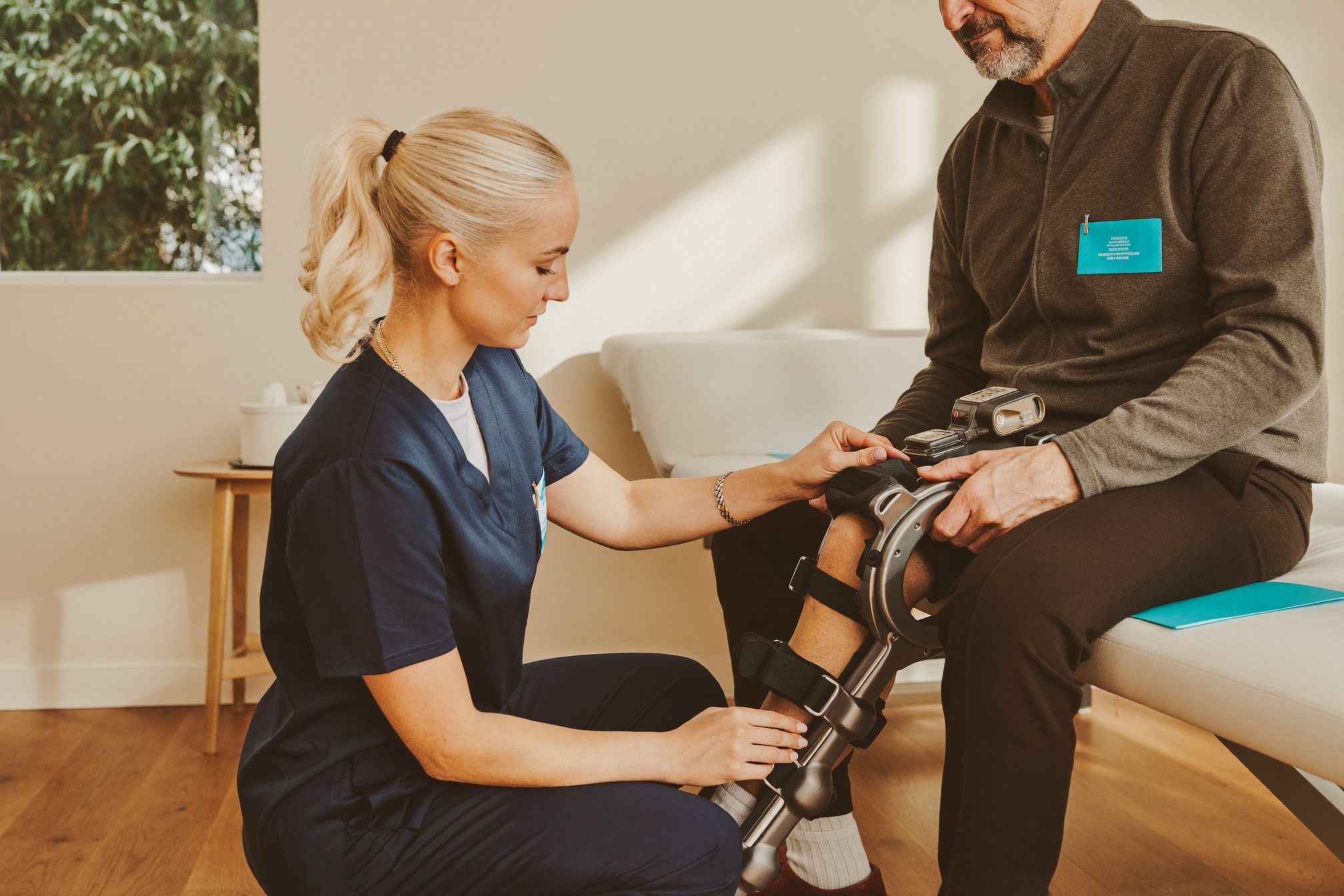
Knee-On-Trac is a targeted decompression therapy for the knee. Using gentle, controlled traction, it eases pressure inside the joint and opens up room for healthier movement. It is comfortable, non-invasive, and a regular part of how Dr. Sarah Scharf treats stiff, achy, and overloaded knees.
You relax while the device applies a steady, gentle pull to the knee. That traction decompresses the joint, encourages fresh blood flow, and helps nourish the cartilage and soft tissue inside. Sessions are short and painless, and they slot naturally alongside the other therapies in your plan.
When a joint is compressed all day, it has little chance to recover. Taking the pressure off irritated tissue supports the healing process, so the knee feels looser and moves more freely. Used inside the protocol, it sets the stage for progress that lasts.
A joint that never gets to rest
Your knee spends nearly every waking hour under compression. Standing, walking a Marin trail, climbing stairs, even sitting with the joint bent — the surfaces inside are pressed together almost constantly. For a healthy knee that is fine. For one that is stiff, arthritic, or irritated, that unrelenting pressure becomes part of the problem.
Here is the detail that makes it matter: the cartilage lining your knee has no blood supply. It is fed entirely by synovial fluid, the joint's built-in lubricant and delivery system. That fluid only circulates when the joint moves and the pressure inside it changes — a squeeze-and-release cycle that pushes nutrients in and waste out. A knee held under steady compression barely gets to run that cycle, so the cartilage is left both squeezed and under-fed.
Knee-On-Trac exists to give the joint what daily life rarely does: a moment of genuine decompression. It gently pulls the joint surfaces apart so the knee can breathe, feed, and recover.
What gentle traction actually does inside the knee
The device applies a steady, controlled pull to the lower leg. Simple on the outside, but it changes the mechanics inside the joint in three useful ways.
It opens the joint space
The traction eases the two joint surfaces apart, creating room where they had been pressed together. That space alone takes load off irritated cartilage and the tissues around it.
It restarts synovial circulation
The pull-and-release of a session drives the pressure changes that move synovial fluid through the joint — delivering the nutrition cartilage cannot get any other way.
It relieves pressure on sore surfaces
By unloading the joint even briefly, traction lets irritated surfaces settle down, which is often why the knee feels looser and moves more freely right after a session.
Who it's for
Knee-On-Trac is aimed squarely at knees whose trouble is tied to compression and stiffness.
Stiff, achy, overloaded knees
Joints that feel tight and compressed by the end of an active day often respond well to regular decompression.
Osteoarthritic and worn joints
When cartilage is thinning, keeping the remaining tissue nourished and unloaded matters. Traction supports both, gently and without any medication.
Active adults staying in the game
For patients who want to keep hiking, golfing, and playing pickleball, decompression helps the knee recover between the activities that load it.
How it fits the knee protocol
Decompression sets the stage; the therapies paired with it do the deeper repair work while the joint is unloaded.
Paired with laser and shockwave
An unloaded joint is the ideal moment to apply Class IV laser or focused shockwave — the tissue is no longer being compressed while it tries to heal.
It prepares the joint for movement work
A looser, better-lubricated knee tolerates strengthening and range-of-motion exercises far better, so the home program gets more traction — literally and figuratively.
One piece of a coordinated plan
Many patients feel looser right after a session, with the more durable gains building across a series when decompression is combined with the rest of the protocol.

Take the pressure off your knee
If your knee feels tight, compressed, and slow to recover after a full day, decompression may be the relief it has been missing. Let's see whether it belongs in your knee program.
See if knee decompression is right for youFAQFrequently Asked Questions
It is a good fit for patients with knee stiffness, osteoarthritis, or general joint compression, especially as part of a broader knee program.
Most people find it relaxing. You sit or lie back while the device does the work, and there is no pain involved.
Each session is brief, and the number you need depends on your knee and your overall plan, which Dr. Scharf maps out after your exam.
It works best as one piece of a coordinated protocol rather than a stand-alone fix. Pairing it with movement work makes the results hold.
There is no downtime. Many patients feel looser right after a session, and the bigger gains build over a series of visits.
 Marin Joint Health
Lasting relief from knee and joint pain without surgery
If knee or joint pain is holding you back, our doctors treat the root cause, not just the symptoms, without surgery or drugs.